


Green Innovation – A testament to HUTECH students' commitment to sustainability
- 27/06/2025
With a solid foundation of academic knowledge and a sharp awareness of real-world challenges, students of Ho Chi Minh City University of Technology (HUTECH) are creatively repurposing natural materials and agricultural by-products into innovative products that are both practical and environmentally friendly.
Green Innovation – A testament to HUTECH students' commitment to sustainability
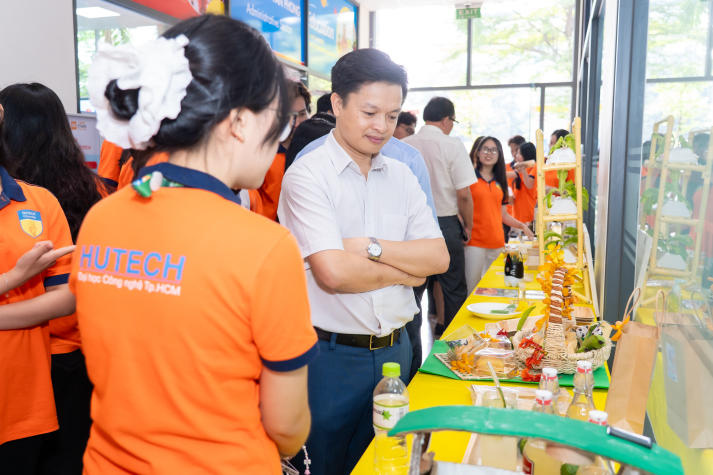
Drawing on their specialized knowledge and real-life needs, students have developed a wide range of products in fields such as Biotechnology, Food Technology, Cosmetic Technology, and Environmental Resource Management. Each idea reflects not only scientific creativity but also social awareness and a sense of responsibility to the community.
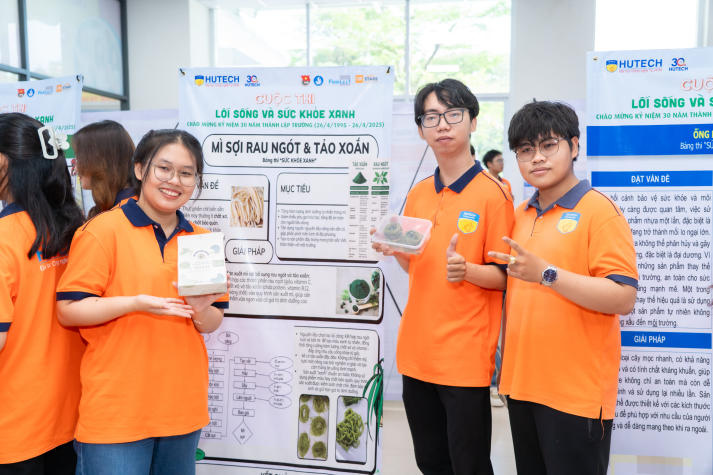
These student-led ideas showcase a growing sense of social awareness and responsibility
In the field of environmental sustainability, products such as bio-incense made from pomelo, tangerine, and longan peels stand out for their blend of tradition and eco-friendliness. Bioplastics from durian seeds offer a practical alternative to conventional plastics, with biodegradable properties suitable for the packaging industry. Innovative ideas also include UV-protective fabric made from mushroom and banana fibers, an eco-conscious approach to sustainable fashion. Other standout projects include wigs made from coconut fiber, Greenv pavement tiles that generate electricity from footsteps, and biodegradable bamboo straws, demonstrating diverse and science-driven solutions to environmental issues.
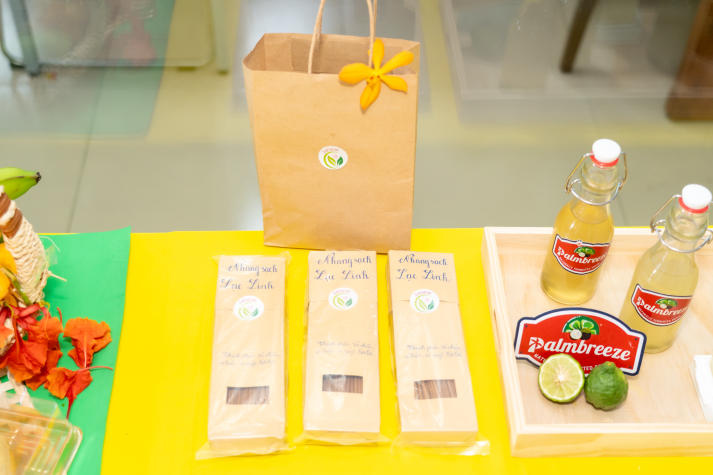
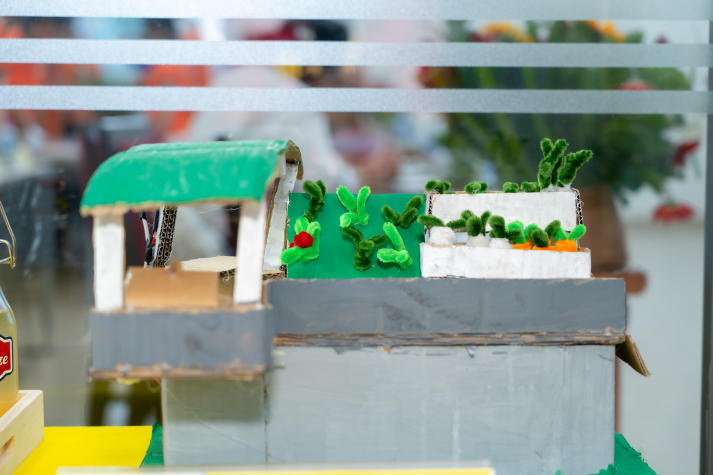
Environmental initiatives stand out for their creative, eco-conscious solutions
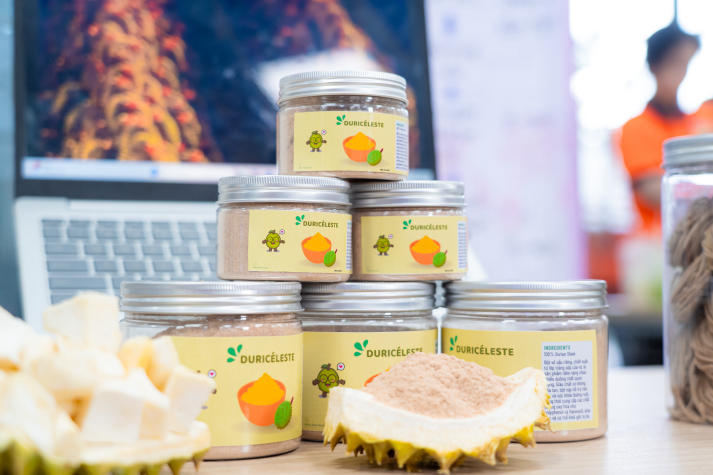
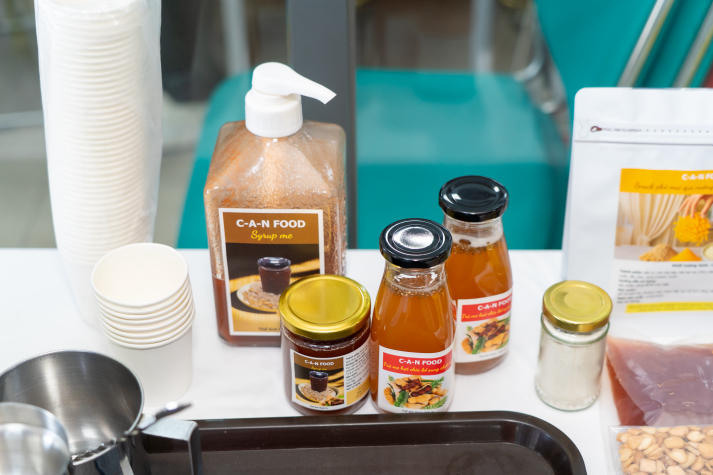
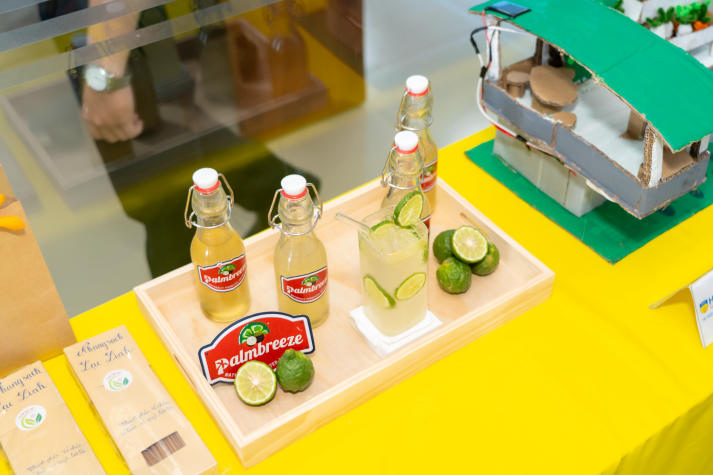
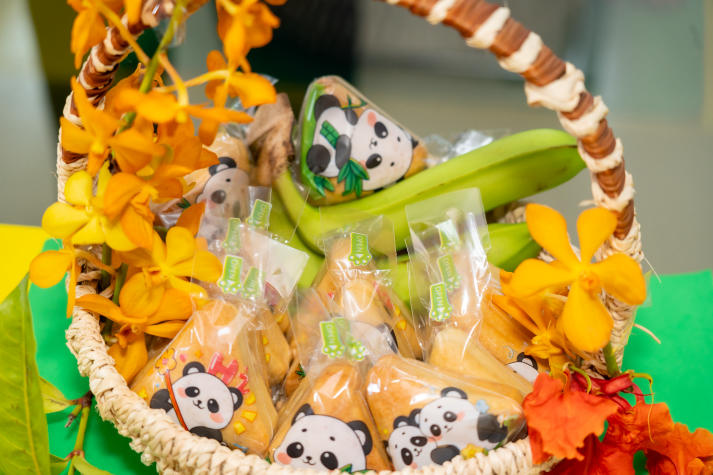
In Food Technology, students introduced a variety of impressive innovations. The DuriCéleste project, for example, transforms durian peels into food-grade powder for noodles, cookies, or crunchy toppings. Other creations include spinach-spirulina noodles, rice ball bread enriched with green banana flour, and hamburger buns fortified with nutrient-rich Job’s tears. A product line made from tamarind, which includes syrup, spicy-sweet jam, cheese-flavored snacks, and caffeine-free bottled tea, showcases students' creativity and reflects current trends in natural, health-conscious foods.
 |
 |
 |
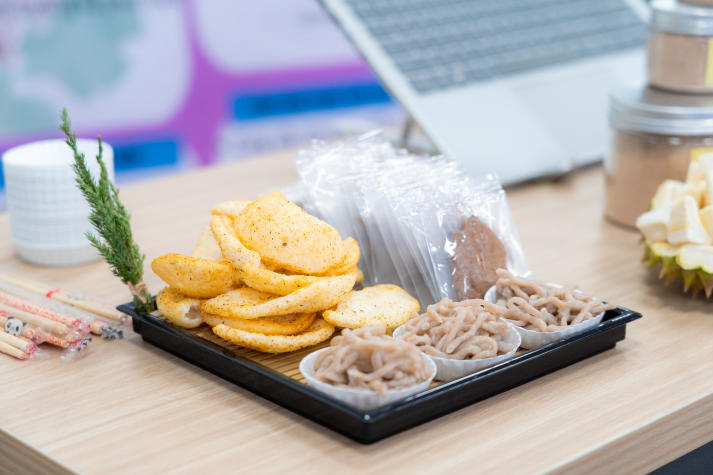 |
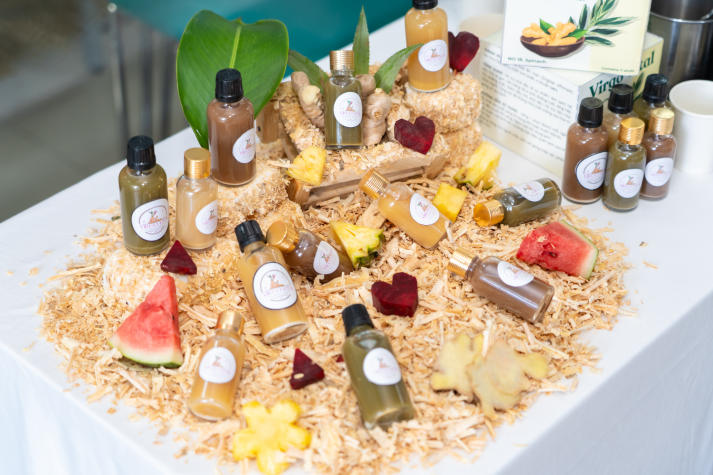
In food technology, students delivered an impressive variety of natural, health-focused innovations
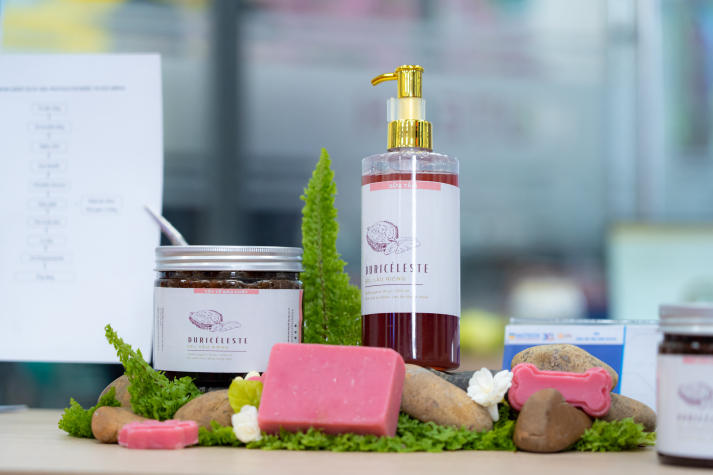
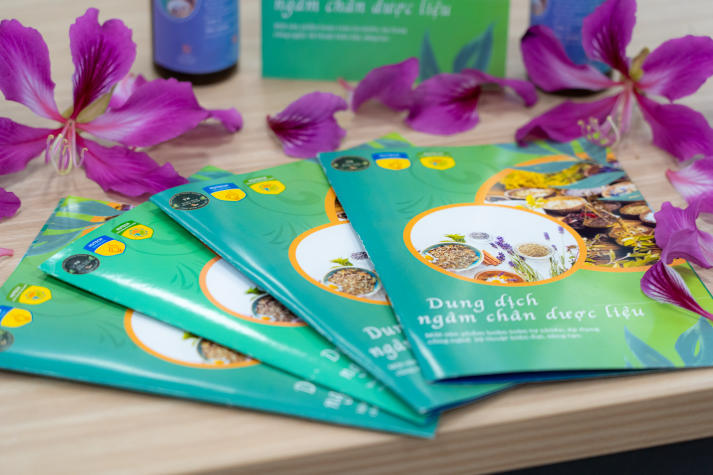
In Cosmetic Technology, students earned praise for products such as vegetable-based lipsticks and durian peel body wash, using natural ingredients like beetroot, carrot, sweet potato, and durian. These products are celebrated for their safety, moisturizing properties, and natural pigmentation, embodying the clean beauty trend. In biotechnology, a standout product is an herbal foot soak made from ingredients like ginger, lemongrass, betel leaves, and cinnamon, which is an effective solution for relaxation and muscle relief with high potential for wide community use.
 |
 |
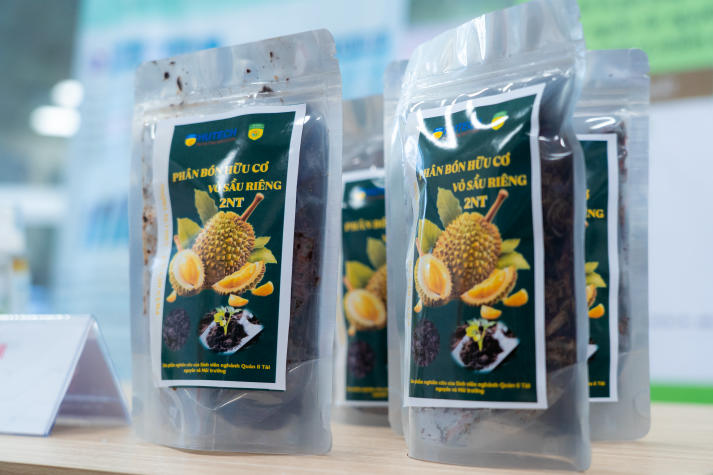
The beauty and biotech categories also saw outstanding, nature-based product ideas
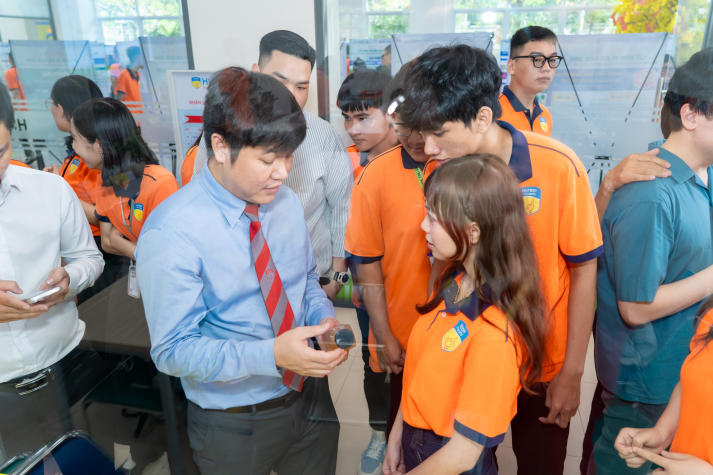
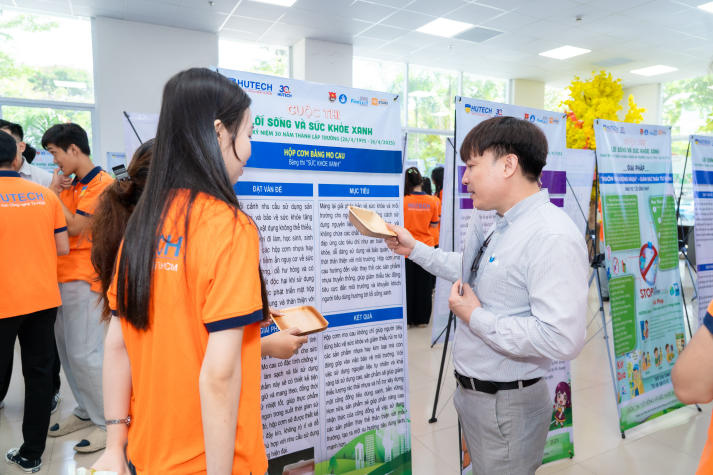
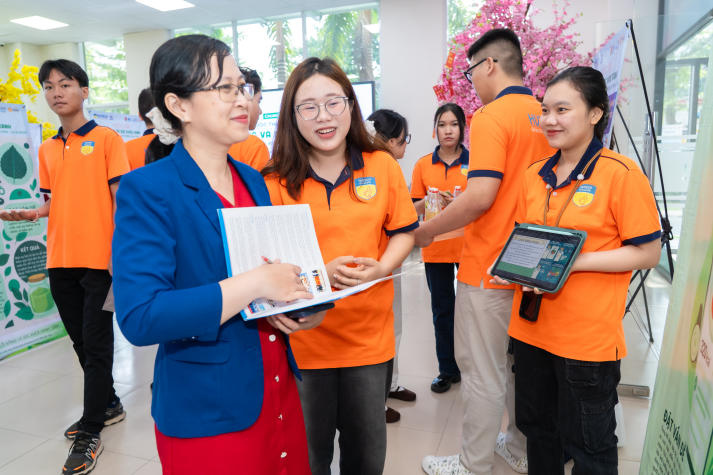
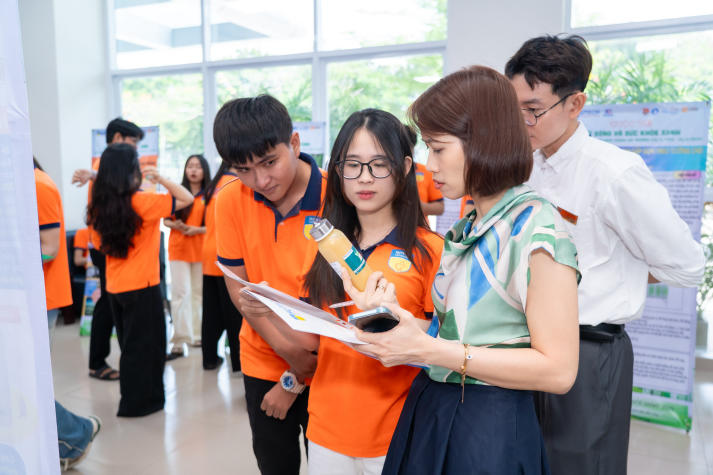
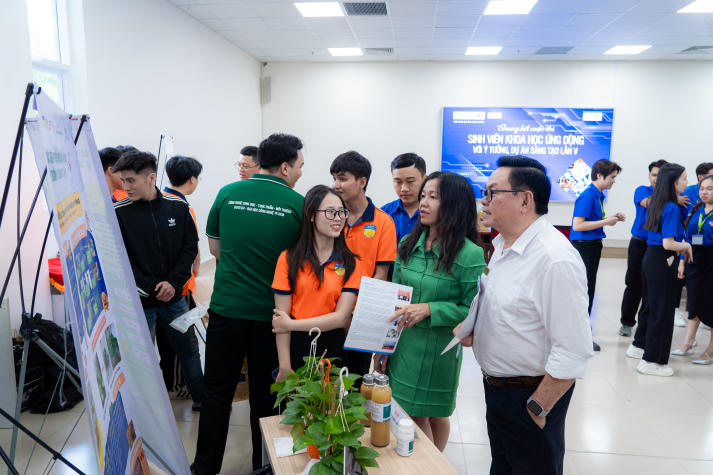
All products underwent serious research, testing, and refinement. From ideation and market surveys to selecting suitable materials and conducting multiple trials, students applied both technical knowledge and soft skills, such as problem-solving, teamwork, time management, presentation, and critical thinking. They defended their projects before evaluation panels, gaining experience in both execution and innovation.
 |
 |
 |
 |
 |
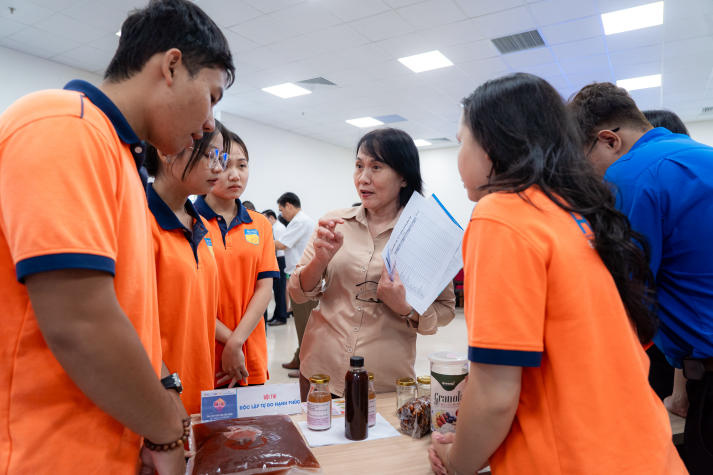 |
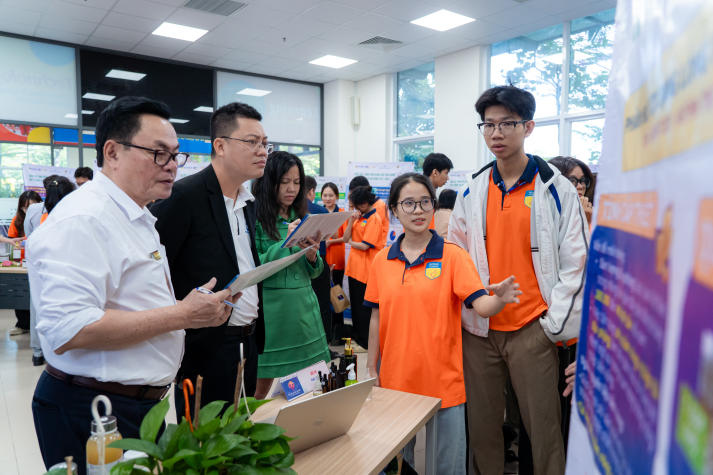
Product development also helps students acquire practical knowledge and essential soft skills
Students also explored pricing strategies, brand building, and market access. They learned to refine their products based on user feedback, constantly improving until a complete version was achieved. These experiences are invaluable for future careers, especially for those with entrepreneurial aspirations.
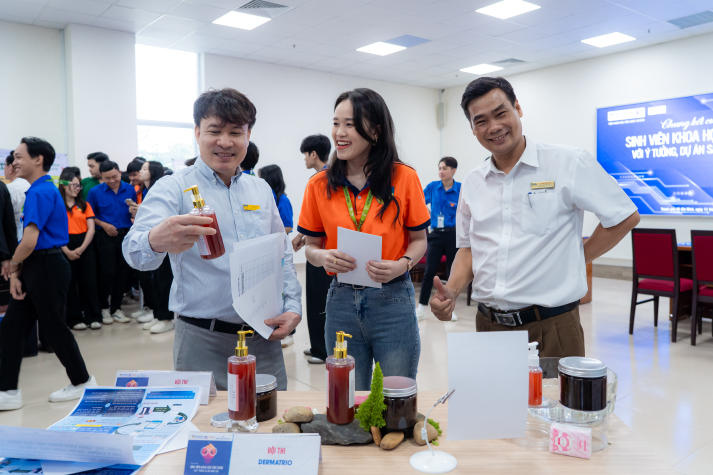
More than a learning experience, each green product reflects HUTECH students’ commitment to community
Beyond academics, every green innovation by HUTECH students represents a deep sense of responsibility toward the community. These projects are a testament to a generation that is proactive, creative, and deeply aware of their environmental impact.
Communication Center
Other news

Nearly 1,000 students take on a series of technology challenges at OLP’25, OlpAI’25, Procon’25, and ICPC Asia HCMC 2025
Taking place from December 8 to 12, 2025 at Ho Chi Minh City University of Technology (HUTECH), the 34th Vietnam Student Informatics Olympiad...

Hundreds of contestants gather at the ICPC Asia HCMC 2025
The International Collegiate Programming Contest (ICPC) Asia Ho Chi Minh City 2025 officially opened on the afternoon of December 11, bringing...

Opening Ceremony for OLP’25, OlpAI’25, Procon’25, and ICPC Asia Ho Chi Minh City 2025
The opening ceremony of the 34th Vietnam Student Informatics Olympiad, the first Vietnam Student Artificial Intelligence Olympiad, Procon Vietnam...
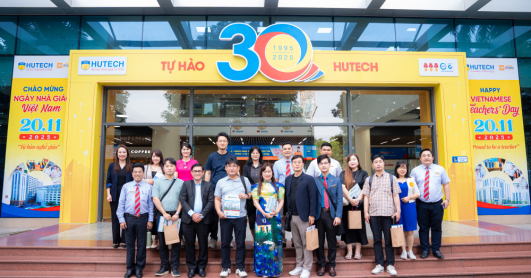
HUTECH strengthens international partnerships through meetings with leading global universities
From November 24 to 30, Ho Chi Minh City University of Technology (HUTECH) welcomed and held working sessions with a number of international...

HUTECH to host OLP, OlpAI, Procon, and ICPC 2025 from December 8 to 12
From December 8 to 12, Ho Chi Minh City University of Technology (HUTECH) is honored to host the Vietnam Student Informatics Olympiad (OLP), the...
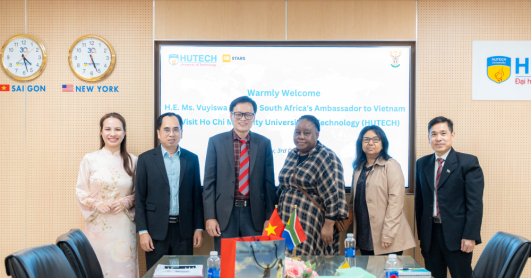
HUTECH welcomes the Ambassador Extraordinary and Plenipotentiary of the Republic of South Africa to Vietnam to explore opportunities for educational cooperation
On December 3, Ho Chi Minh City University of Technology (HUTECH) welcomed H.E. Ms. Vuyiswa Tulelo, Ambassador Extraordinary and Plenipotentiary of...