


Advancing the Integration of Artificial Intelligence into Postgraduate Training at HUTECH
- 23/07/2025
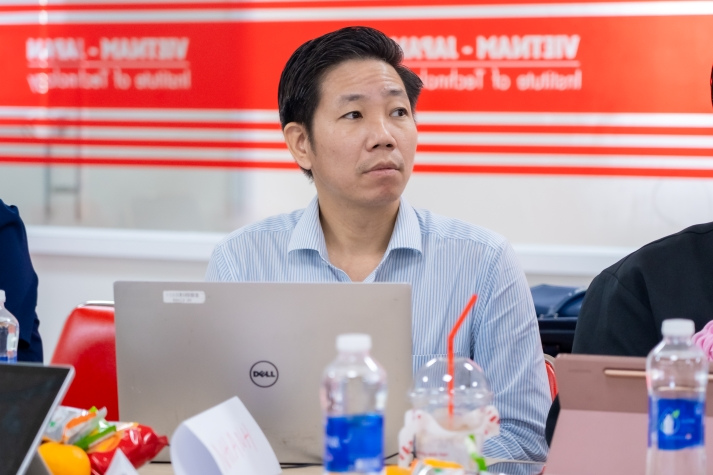
As artificial intelligence (AI) continues to reshape the entire higher education ecosystem, postgraduate teaching and program management are also facing the need for fundamental transformation. In a spirit of proactive adaptation, the Institute of Postgraduate Education at Ho Chi Minh City University of Technology (HUTECH) organized the academic seminar titled “Postgraduate Teaching in the Age of AI” on July 22.
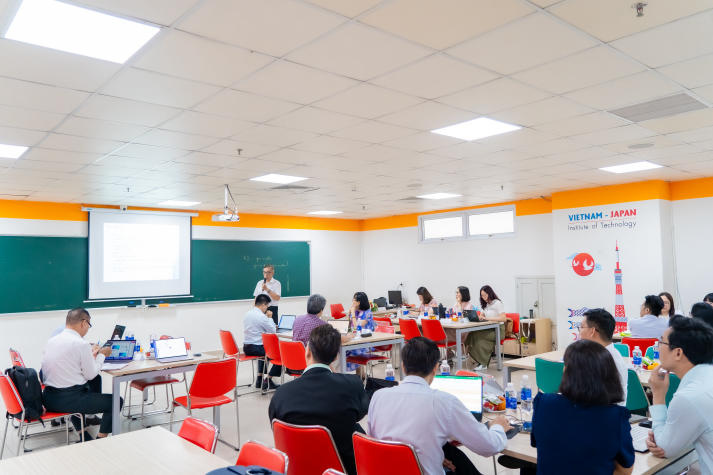
An opportunity for postgraduate faculty and researchers to explore updated AI insights
The keynote speaker of the seminar was Prof. Dr. Do Phuc – a leading expert in artificial intelligence, former Vice President of the University of Information Technology – Vietnam National University Ho Chi Minh City (VNU-HCM), and former Head of the External Relations Department at VNU-HCM. The event also welcomed the active participation of numerous postgraduate program directors at HUTECH, along with leaders from related departments.
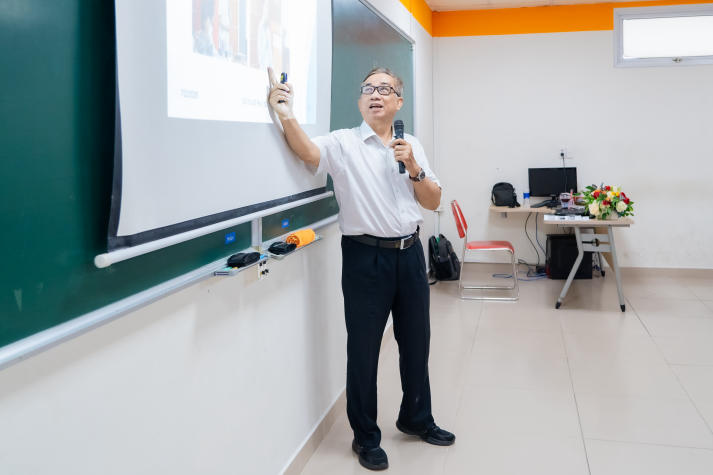
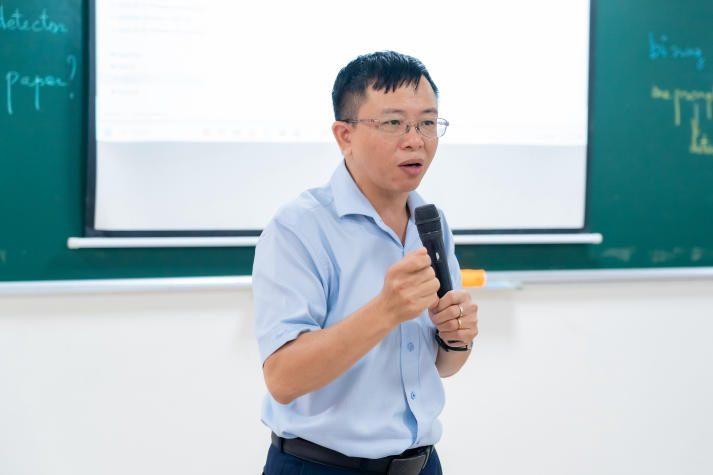
More than just a forum for academic exchange, the seminar also marked the starting point of a strategic initiative to review and restructure HUTECH’s Master's programs in the near future. Drawing on his extensive experience in teaching and research in the field of AI, Prof. Dr. Do Phuc guided participants through the concept of “prompt engineering” – the technique of crafting effective prompts to optimize the use of large language models (LLMs) – and demonstrated its practical applications in lesson planning, syllabus development, and the formulation of learning outcomes in postgraduate education.
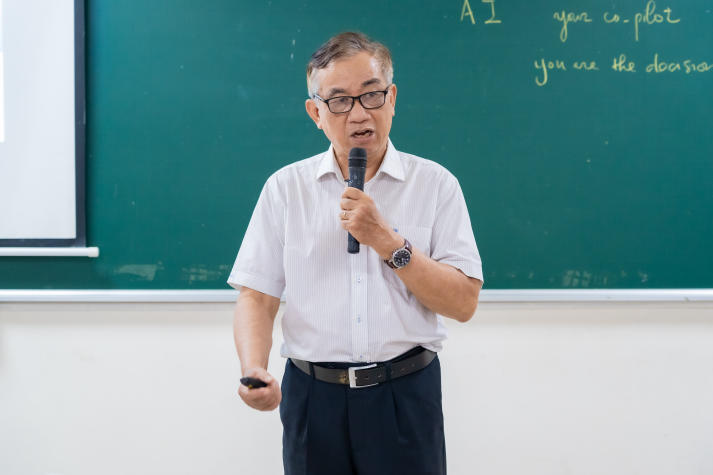
Prof. Dr. Do Phuc affirmed that modern education is entering a new era
One of the key topics that received significant attention was the potential of applying AI to reassess core components of Master's programs, including learning outcomes, curriculum content, and course syllabi. Using concrete examples from the field of Information Technology, the speaker demonstrated how an AI model could critique or propose adjustments to learning outcomes in alignment with the practical skills demanded by businesses and society—particularly in rapidly evolving AI domains such as Natural Language Processing (NLP), Computer Vision, and Deep Learning.
 |
 |
 |
 |
From designing the “Deep Learning” syllabus—with explicit outcomes such as applying CNN, RNN, and Transformer architectures to real‑world tasks—to employing AI to gauge how well the current program aligns with emerging technological contexts, the speaker highlighted the enormous potential for a comprehensive digital transformation of postgraduate education. AI tools, he noted, can even help craft detailed lesson plans, build rubric‑based assessment systems, and develop self‑study materials for learners—needs that are increasingly critical within personalized learning models.
Another key highlight was the emphasis on maintaining a clear boundary between the application and the overuse of AI in teaching, learning, and scientific research. Prof. Dr. Do Phuc cautioned that while AI offers exceptional efficiency and support, a lack of proper oversight could lead to serious consequences regarding academic ethics and research quality. Therefore, alongside adopting AI to enhance teaching and assessment methods, HUTECH must also establish strict control mechanisms to ensure that AI serves as a supportive tool—without replacing learners' critical thinking and creativity.
 |
 |
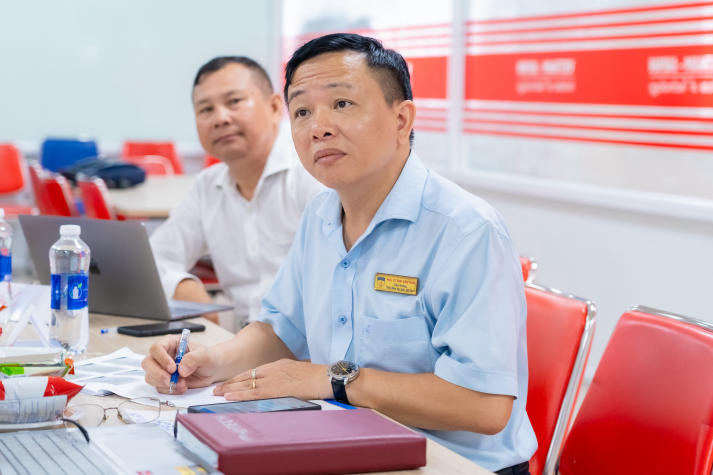
Lecturers engaged in discussions on practical applications of AI in postgraduate education
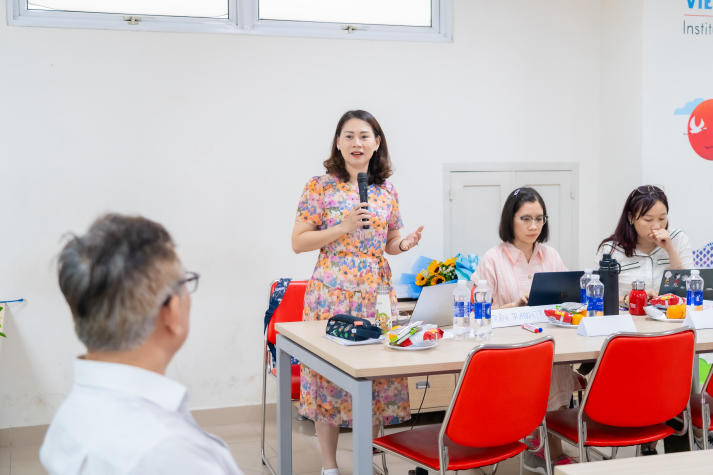
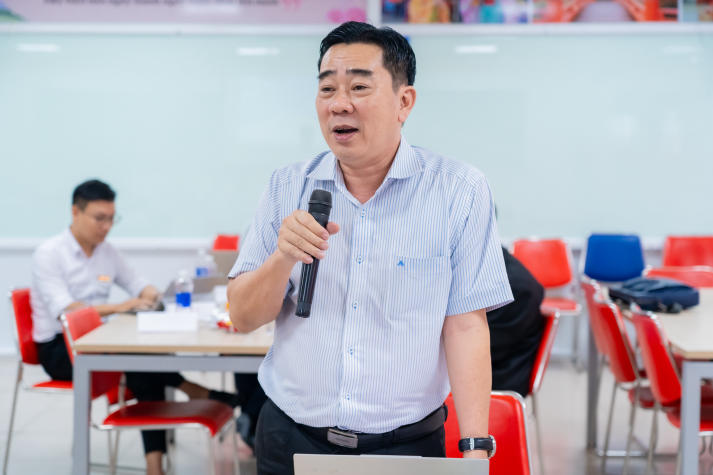
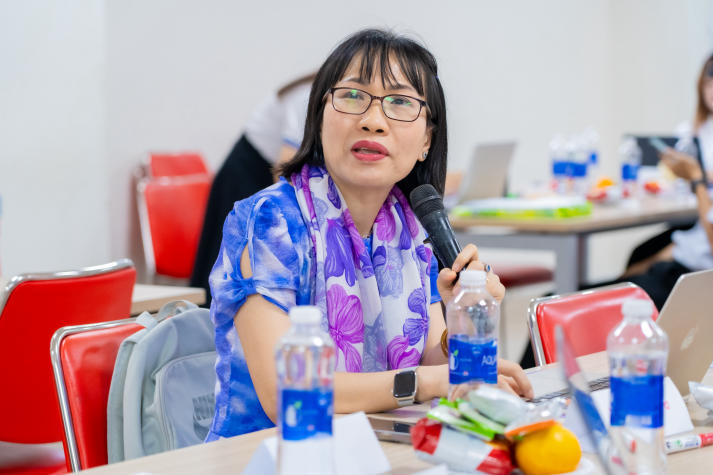
In the practical session, participating lecturers had the opportunity to directly experience using AI through a system of prompts developed by Prof. Dr. Do Phuc. These prompts were designed to serve various purposes in postgraduate teaching, such as lesson planning, creating discussion scenarios, designing critical thinking questions, building assessment rubrics, and writing personalized feedback for learners. The lecturers applied the prompts using AI tools like ChatGPT to generate content, then collaboratively evaluated the relevance, effectiveness, and limitations of each prompt. This hands-on experience proved highly valuable, enabling faculty members to better understand how to integrate AI into their professional activities in a flexible yet well-regulated manner.
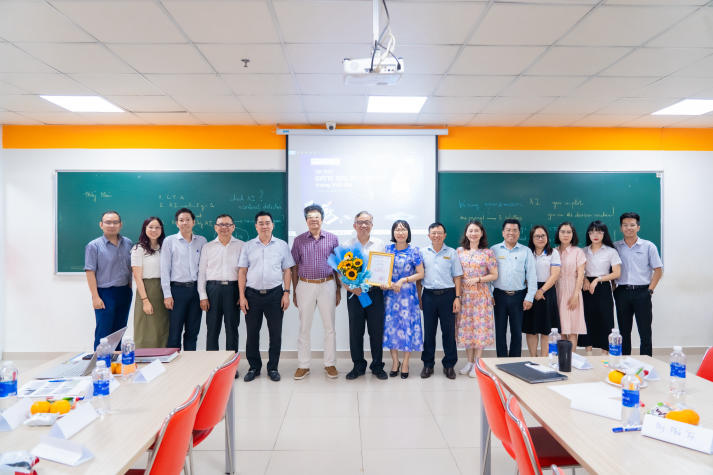
The seminar broadened lecturers' perspectives on educational trends in the digital age
Với tinh thần đổi mới đó, hội thảo lần này đã mở ra một hướng tiếp cận mới trong giảng dạy Thạc sĩ, là bước chuẩn bị cần thiết cho các hoạt động xây dựng - điều chỉnh - đánh giá chương trình đào tạo sau đại học trong thời gian tới, theo hướng tích hợp công nghệ AI một cách bài bản và hiệu quả. Với sự đồng hành của các chuyên gia như GS.TS. Đỗ Phúc, cùng tầm nhìn chiến lược từ HUTECH, bức tranh giáo dục sau đại học đang được vẽ lại bằng những nét vững chắc, sẵn sàng cho một hành trình hội nhập và bứt phá trong thời đại trí tuệ nhân tạo.
News by: Bao Thu
Photos by: Anh Khoa
Media Center
Other news
Ngee Ann Polytechnic (Singapore) students join HUTECH students in discovering a young and dynamic Vietnam
On September 14, Ho Chi Minh City University of Technology (HUTECH) welcomed a delegation of faculty members and students from Ngee Ann Polytechnic...
International students begin their Fall Semester Exchange at HUTECH
On September 4, the “Welcome to HUTECH: Orientation Session for International Students” helped international students participating in the Fall...
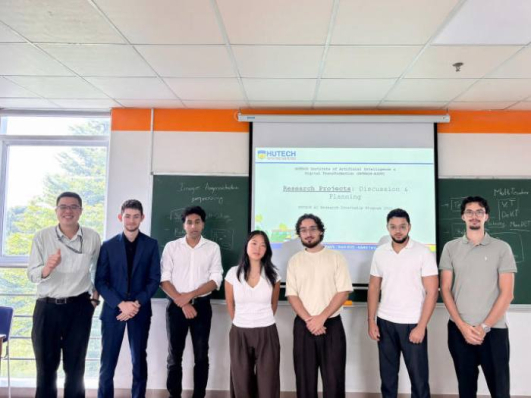
French students complete intensive research internship at HUTECH Institute of Artificial Intelligence and Digital Transformation
After a period of learning, exploration, and tackling real-world technology challenges, a group of French students concluded their intensive...
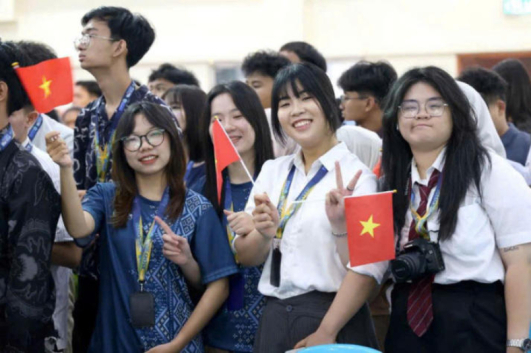
HUTECH students make their mark at ASEAN Student Experiential Mobility Programme in Malaysia
Proactively integrating, experiencing international learning environments, and testing themselves in multinational academic activities, 4 students...
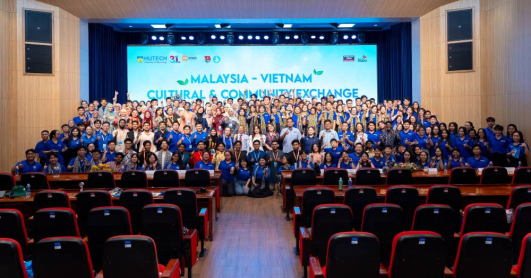
HUTECH connects Vietnamese and Malaysian youth through the International Green Summer Volunteer Campaign 2026
The gap between young people from the two countries was bridged in a very special way: painting a playground, cleaning streets, bringing light to...
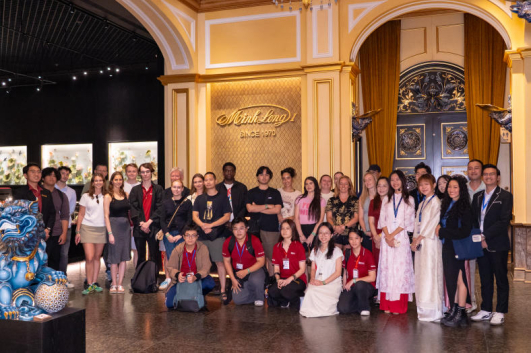
Vietnam Summer Program 2026: I-HUTECH connects students through learning and cultural exchange
Nearly two weeks of learning, cultural exploration, and hands-on experiences gave students from Ho Chi Minh City University of Technology (HUTECH)...