


Civil Engineering students explore the Statue of Unity with Indian expert
- 31/07/2025
To offer students a comprehensive perspective on one of the most impressive and complex engineering feats of the 21st century - the Statue of Unity in India - the Faculty of Civil Engineering at Ho Chi Minh City University of Technology (HUTECH) organized a workshop on July 30 titled “Making of the Statue of Unity: A Marvel of Modern Indian Engineering.”
 |
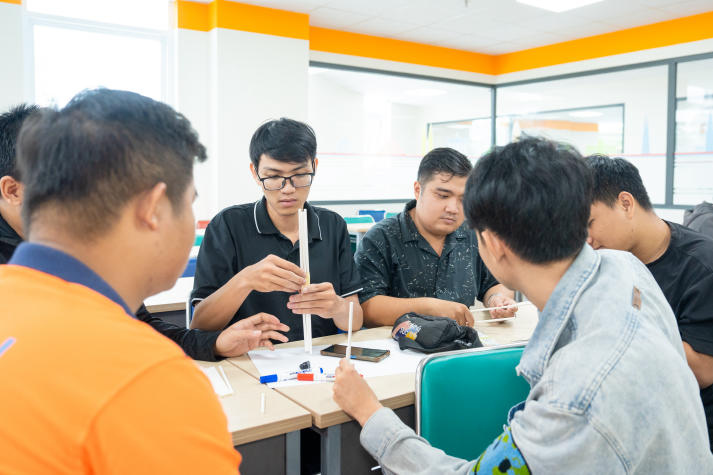 |
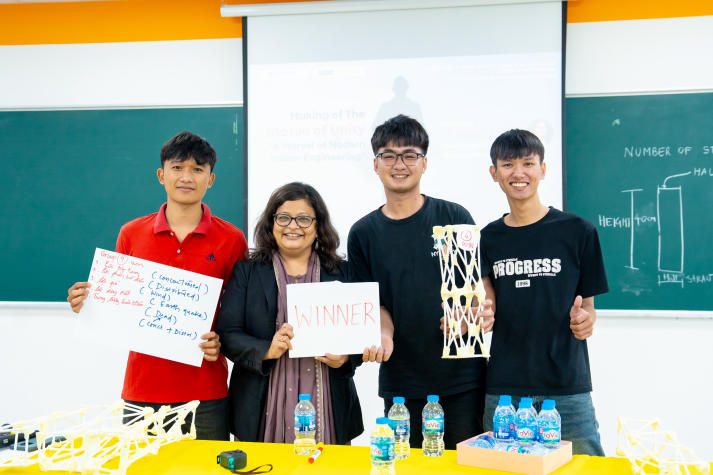
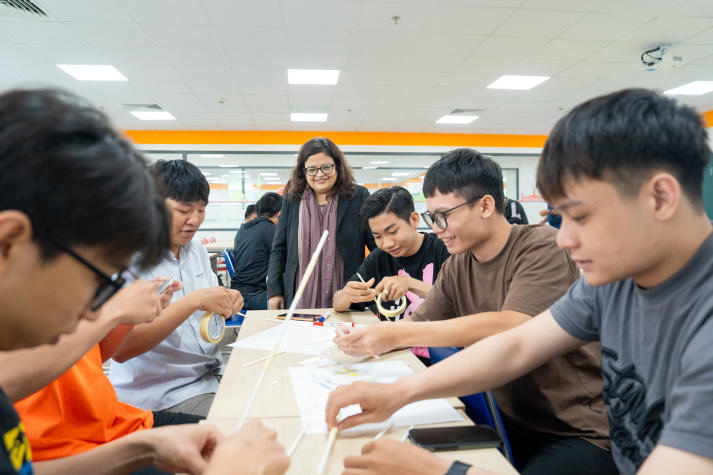
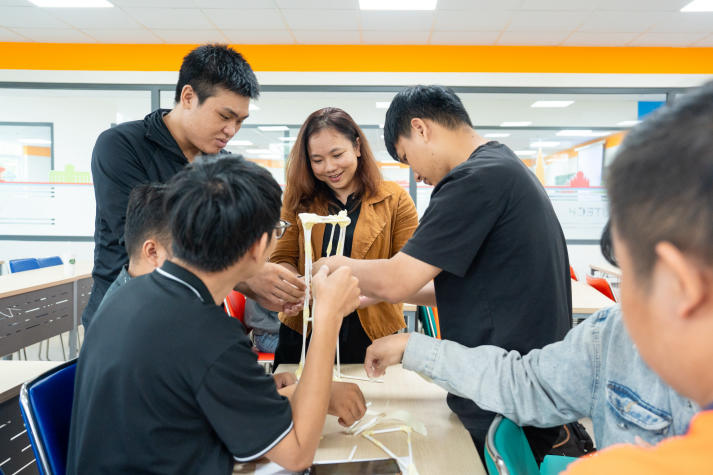
The workshop began with a hands-on activity where students built paper towers using straws, giving them a direct experience with concepts such as center of gravity, stability, and material behavior
At the workshop, Dr. Nipa A. Desai, Director of Sigma Institute of Engineering (India), offered an in-depth overview of the construction journey behind the 182-meter-tall statue of Sardar Vallabhbhai Patel. The statue stands not only as a symbol of Indian unity but also as a powerful testament to cutting-edge structural engineering.
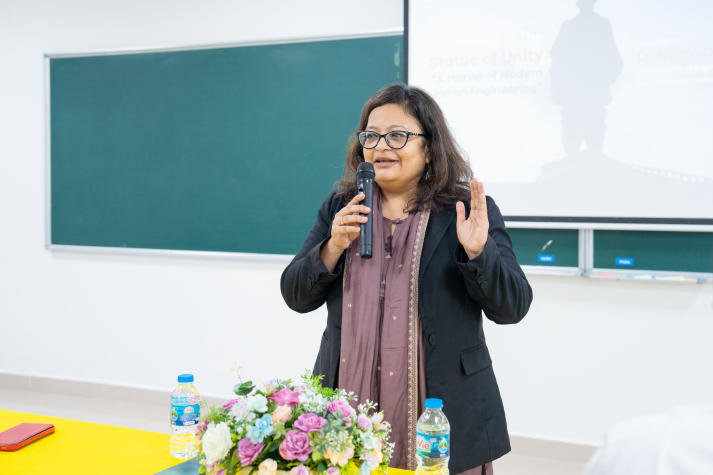
The speaker provided a panoramic view of the construction process of the Sardar Vallabhbhai Patel statue
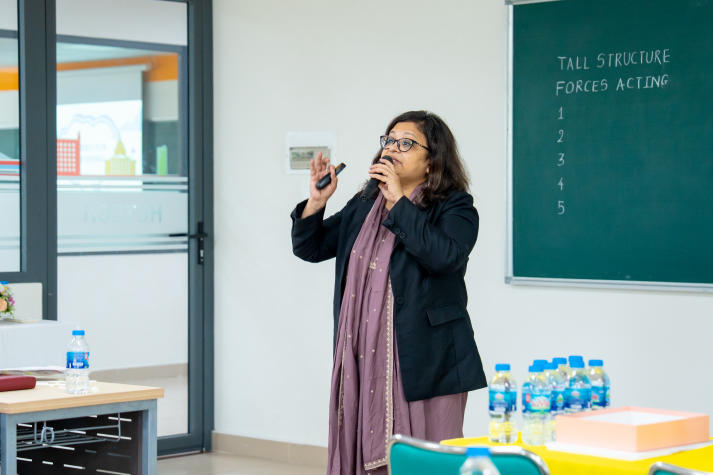
From the initial design phase to on-site execution, the Statue of Unity presented numerous challenges. Built on fractured volcanic rock, with a walking pose that required special stability calculations, the project also involved the massive use of materials - over 210,000 cubic meters of self-compacting concrete poured continuously for 132 hours. These engineering hurdles were addressed with innovative structural solutions, including a complex raft foundation, an oval-shaped reinforced concrete core connected to specialized load-bearing walls, and a pair of 250-ton tuned mass dampers installed in the chest of the statue. All of these measures ensured the structure could withstand wind speeds of up to 180 km/h and earthquakes measuring up to 6.5 on the Richter scale.
 |
 |
In addition to presenting technical data, Dr. Desai also emphasized the human spirit behind the structure. More than 3,000 workers, along with hundreds of engineers and scientists, contributed to realizing the statue, not only as a national symbol of unity but also as a global landmark of cultural and engineering significance.
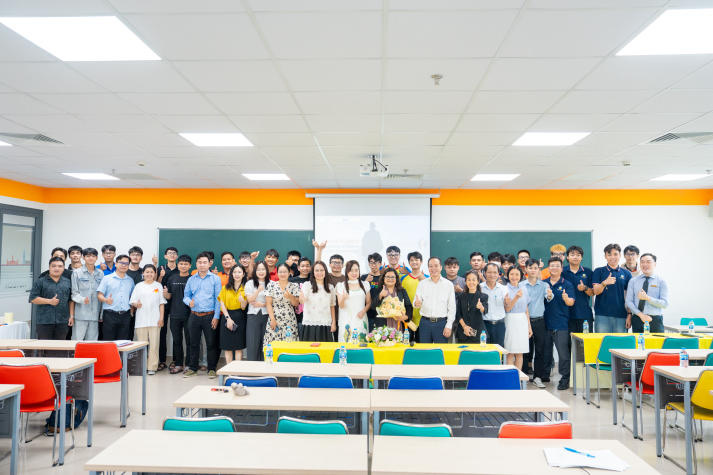
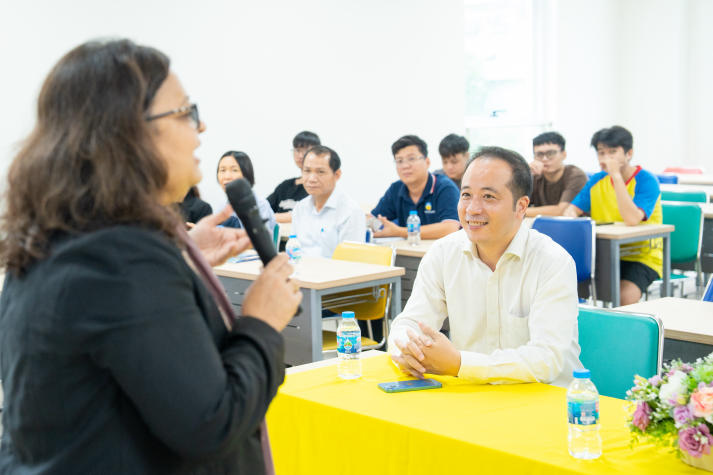
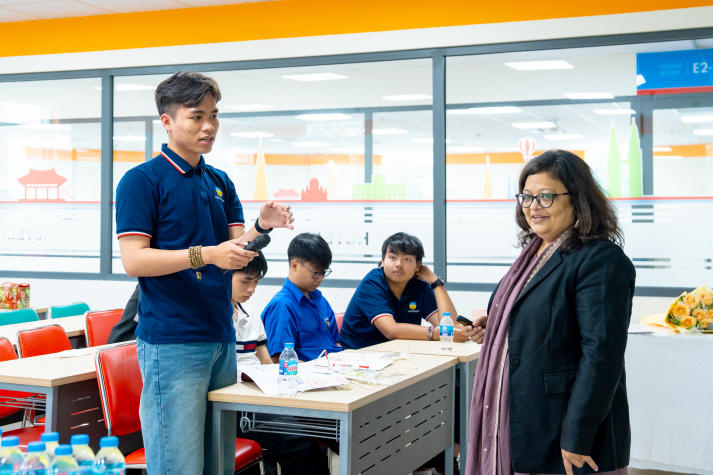
The workshop provided practical insights and helped nurture the critical thinking of HUTECH’s aspiring engineers
In the context of globalization and rapid technological advancement, the workshop offered not only valuable practical knowledge from a world-class project but also helped foster the mindset of a new generation of engineers at HUTECH who are confident, adaptable, and innovative.
News: Anh Hào
Photo: Hoàng Thanh
Communication Center
News: Anh Hào
Photo: Hoàng Thanh
Communication Center
Other news
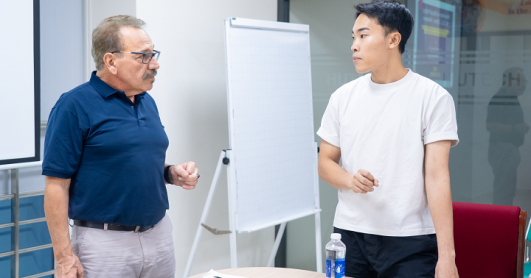
Business Administration students approach global economic policy with expert from Marquette University
To give students a better understanding of international business and the global economy, the Faculty of Business Administration at Ho Chi Minh...
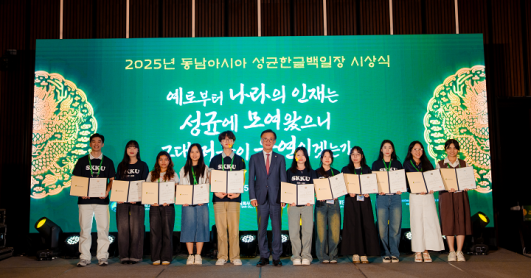
Korean Studies students excel at the 2025 Sungkyun Korean Essay Contest
Overcoming many competitors from universities across Vietnam and abroad, students from the Faculty of Korean Studies at Ho Chi Minh City University...
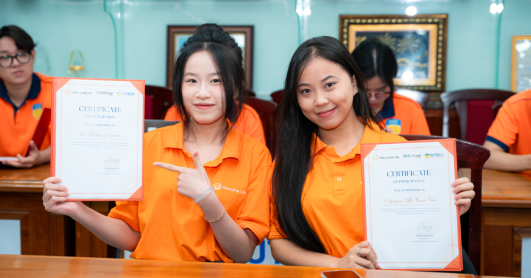
Hanwha Life Finance Mentor wraps up, highlighting growth of 40 HUTECH students
After more than a month of meaningful activities, 40 students from Ho Chi Minh City University of Technology (HUTECH) were honored on October 2 at...

“iHUTECH - iStart - iShine”: Freshmen connect through fun and teamwork
On the morning of October 1, the campus of Ho Chi Minh City University of Technology (HUTECH) came alive as the Institute of International...
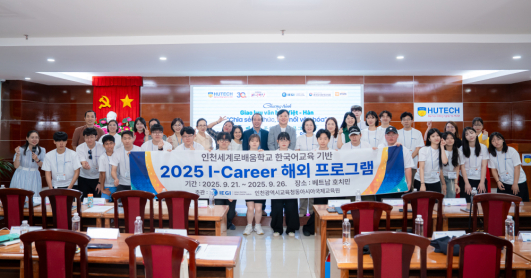
HUTECH and Incheon students engage in Vietnam-Korea cultural exchange
On September 25, a group of students from Incheon (Korea), together with representatives from the Incheon Department of Education, joined the...
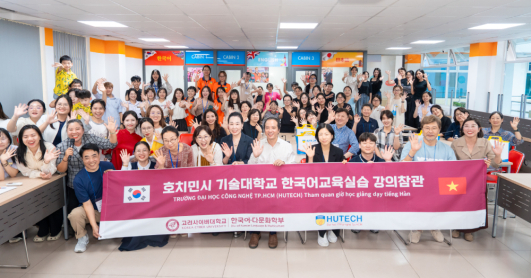
HUTECH and Korea Cyber University conclude educational exchange program
On September 23, the Faculty of Korean Studies at Ho Chi Minh City University of Technology (HUTECH) held a closing ceremony for the study tour and...