


Hundreds of multidisciplinary research projects presented at HUTECH Conference for Young Scientists on Sustainable Development Goals 2026
- 16/05/2026
Amid the rapid rise of digital technology and artificial intelligence, which are reshaping numerous industries, scientific research is increasingly becoming a key foundation for learners to develop innovative thinking, problem solving skills, and adaptability to the future labor market.
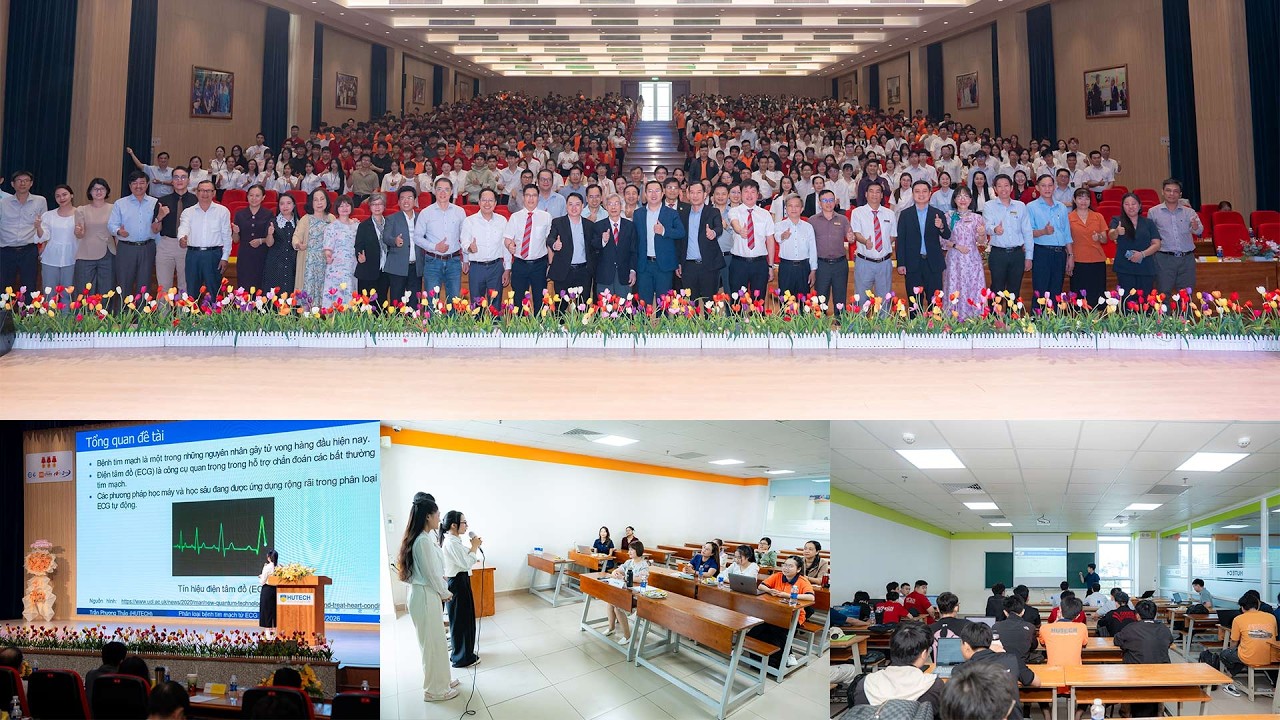
That spirit was clearly reflected at the Ho Chi Minh City University of Technology (HUTECH) Conference for Young Scientists on Sustainable Development Goals 2026 (CYSG 2026), held on May 14, which brought together a wide range of research projects from the University’s undergraduate students, graduate students, and doctoral candidates.
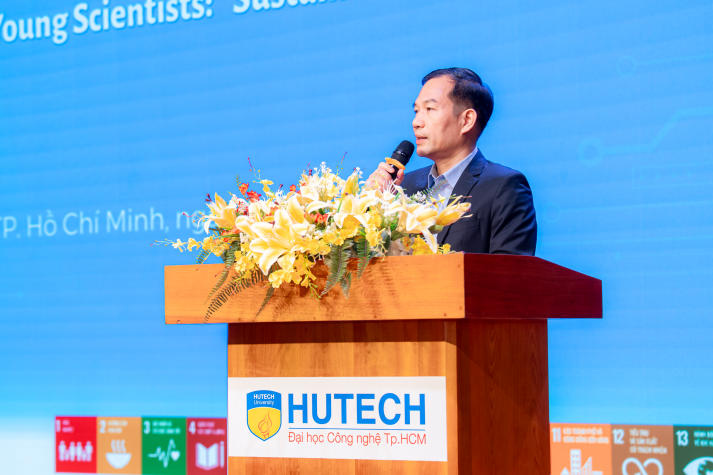
Prof. Dr. Le Van Canh, Vice President of HUTECH, emphasized the important role of science and technology in national development. He also noted that HUTECH has implemented various policies to support learners in scientific research, ranging from research funding to recognition of scientific publications
This year’s conference recorded an impressive scale with 814 papers submitted by 24 faculties and institutes from both inside and outside the University through the conference system. Following a rigorous review process, 197 outstanding papers were selected for publication in the official conference proceedings with an ISBN code, including 108 papers by undergraduate students and 89 papers by graduate students, doctoral candidates, and young researchers. In addition, another 530 papers were published in the CYSG 2026 Proceedings, reflecting the growing research spirit, innovative mindset, and interdisciplinary engagement of HUTECH learners.
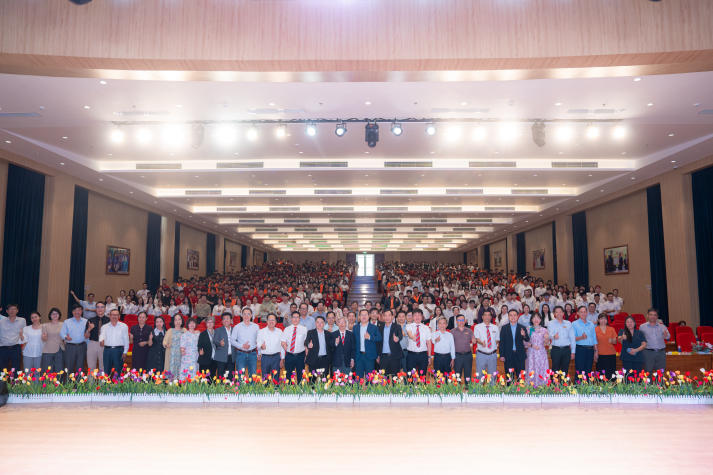
This year’s conference attracted 814 papers from 24 faculties and institutes from both within and outside the University
Opening the plenary presentation session, author Tran Phuong Thao from the Faculty of Information Technology presented the study titled “Evaluation of the Granular Ball Rough Set Model Combined with Modern Classifiers for ECG Classification Problems.” The research focused on leveraging AI and deep learning to improve the classification efficiency of electrocardiogram (ECG) data, aiming to support more accurate cardiovascular disease diagnosis. The study also optimized data features to reduce noise, eliminate redundant data, and maintain stable performance for classification models.
In the field of social and behavioral sciences, several presentations stood out for their approaches to mental health issues in digital environments. A graduate student group consisting of Truong Anh Nguyet, Nguyen Ngoc Dan Quyen, Nguyen Thi Van Khanh, and Le Xuan Quynh presented the study “Digital Empathy and Social Presence: Exploring AI Chatbot Mechanisms for Mental Health First Aid Support for Art Sector Workers in Ho Chi Minh City.” The research analyzed factors such as digital empathy, perceived social presence, and AI assisted coping in the process of AI chatbot based mental health support. Through surveys and experimental research models, the study offered new perspectives on the role of AI in mental healthcare, particularly for creative workers facing increasing psychological pressure.
Meanwhile, many engineering related studies also demonstrated strong practical application potential. Authors Pham Tuan Dat, Vu Hong Phuc, and Tran Huu Cuong from the Institute of Engineering presented the project “Research, Design Improvement, and Fabrication of a Steer By Wire Electric Steering System Model for Automobiles.” The research focused on analyzing the structure and operating principles of electric steering systems in line with trends in vehicle electrification and automation, while proposing improvements to enhance operational stability and safety. The authors also directly designed, modeled, and fabricated the system for practical testing and educational and research activities at the University.
In the field of social and behavioral sciences, several presentations stood out for their approaches to mental health issues in digital environments. A graduate student group consisting of Truong Anh Nguyet, Nguyen Ngoc Dan Quyen, Nguyen Thi Van Khanh, and Le Xuan Quynh presented the study “Digital Empathy and Social Presence: Exploring AI Chatbot Mechanisms for Mental Health First Aid Support for Art Sector Workers in Ho Chi Minh City.” The research analyzed factors such as digital empathy, perceived social presence, and AI assisted coping in the process of AI chatbot based mental health support. Through surveys and experimental research models, the study offered new perspectives on the role of AI in mental healthcare, particularly for creative workers facing increasing psychological pressure.
Meanwhile, many engineering related studies also demonstrated strong practical application potential. Authors Pham Tuan Dat, Vu Hong Phuc, and Tran Huu Cuong from the Institute of Engineering presented the project “Research, Design Improvement, and Fabrication of a Steer By Wire Electric Steering System Model for Automobiles.” The research focused on analyzing the structure and operating principles of electric steering systems in line with trends in vehicle electrification and automation, while proposing improvements to enhance operational stability and safety. The authors also directly designed, modeled, and fabricated the system for practical testing and educational and research activities at the University.
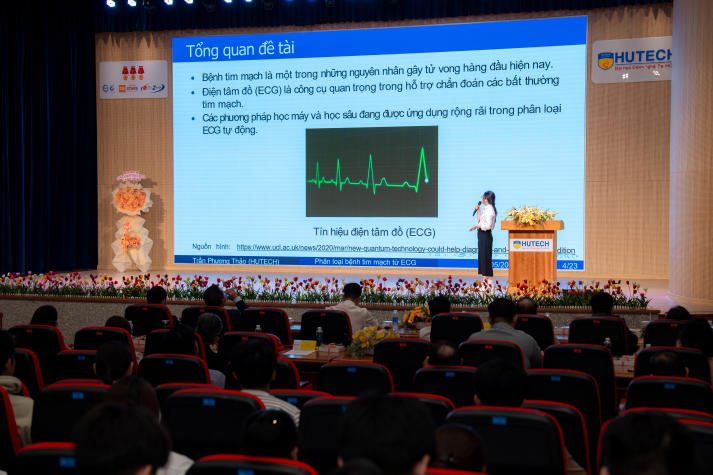
The plenary session featured dynamic discussions and valuable research presentations
In addition to the plenary session, the conference simultaneously organized 32 specialized subcommittee sessions under two major categories: Engineering, Technology and Life Sciences, and Economics and Social Sciences. The sessions covered diverse research areas such as Robotics and Artificial Intelligence, Information Technology, Health Sciences, Marketing and International Business, Law, Languages, Communication and Design, creating an academic forum for undergraduate students, graduate students, and young researchers to exchange ideas, engage in scientific discussions, and share highly applicable research findings.
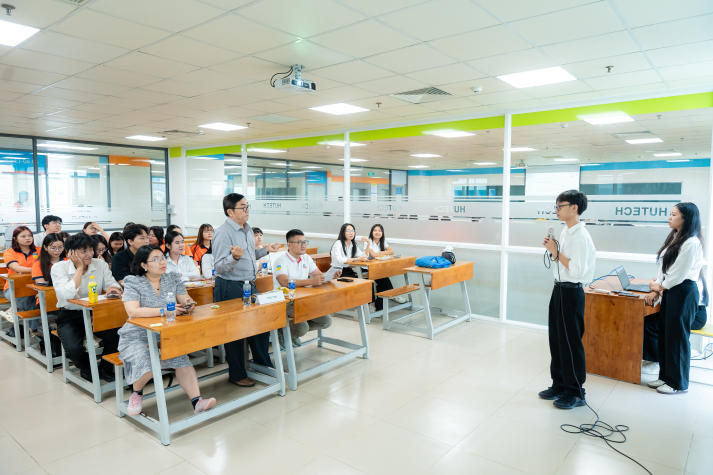
Multidimensional perspectives were presented during the subcommittee discussion sessions
Within the Engineering, Technology and Life Sciences category, topics ranged from Automotive Engineering Technology, Electrical and Mechatronics Engineering, Control and Automation, Robotics and Artificial Intelligence, to Health Sciences, Biotechnology, Food Technology and Environmental Studies, Veterinary Medicine, Civil Engineering, and Architecture. Many reports demonstrated strong alignment with current technological and social issues, including AI powered autonomous vehicles, AI chatbots integrated with IoT data in factories, AMR robots in logistics and warehousing, and the application of IoT, AI, and Blockchain technologies in agricultural land monitoring.
Within the Economics and Social Sciences category, sessions focused on Finance and Commerce, Business Administration, Marketing, Tourism and Hospitality Management, Law, and Social Sciences. Research topics on ESG and green finance, Gen Z consumer behavior, consumer protection on digital platforms, deepfake technology in communication, and the impact of AI on language education contributed to expanding interdisciplinary perspectives and helping learners strengthen analytical, critical thinking, and problem-solving skills in response to emerging issues in the digital society.
News: Mỹ Lệ
Photo: Quốc Đạt - Anh Khoa
Communication Center
Within the Economics and Social Sciences category, sessions focused on Finance and Commerce, Business Administration, Marketing, Tourism and Hospitality Management, Law, and Social Sciences. Research topics on ESG and green finance, Gen Z consumer behavior, consumer protection on digital platforms, deepfake technology in communication, and the impact of AI on language education contributed to expanding interdisciplinary perspectives and helping learners strengthen analytical, critical thinking, and problem-solving skills in response to emerging issues in the digital society.
News: Mỹ Lệ
Photo: Quốc Đạt - Anh Khoa
Communication Center
Other news
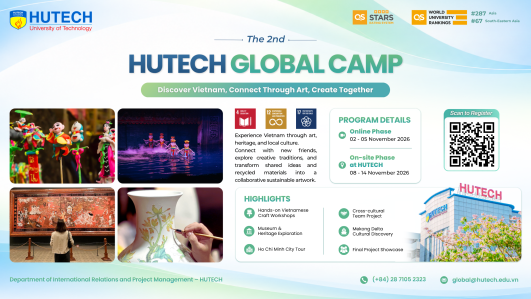
[Call for Participation] The 2nd HUTECH Global Camp
Ho Chi Minh City University of Technology (HUTECH) is pleased to announce the opening of applications for The 2nd HUTECH Global Camp, themed...
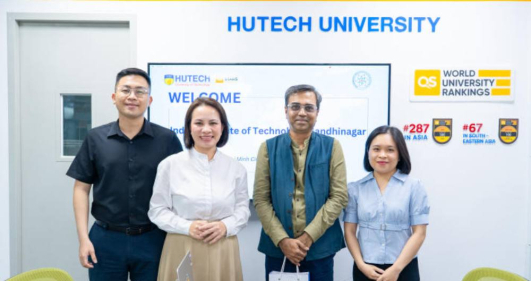
HUTECH connects with IIT Gandhinagar (India) in Media and Design Education
With the aim of strengthening international connections in media and design education, Ho Chi Minh City University of Technology (HUTECH) held an...
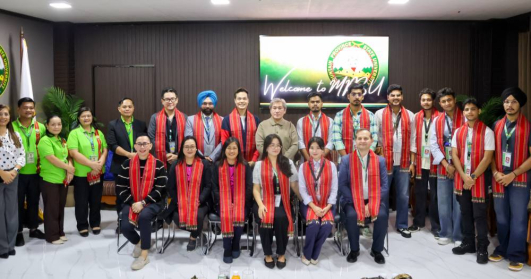
HUTECH lecturer expands international academic connections in the Philippines
From September 14 to 26, Mr. Tran Phuong Hai, Assistant Head of the Finance and Banking Program at the Faculty of Finance and Commerce, Ho Chi Minh...
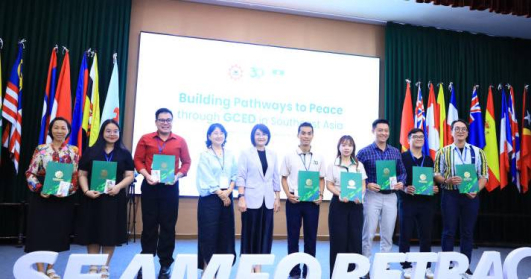
HUTECH representative gains international insights into global citizenship education
From September 8 to 10, Mr. Vo Quoc Dai, Vice Dean of the Faculty of English Language at Ho Chi Minh City University of Technology (HUTECH),...
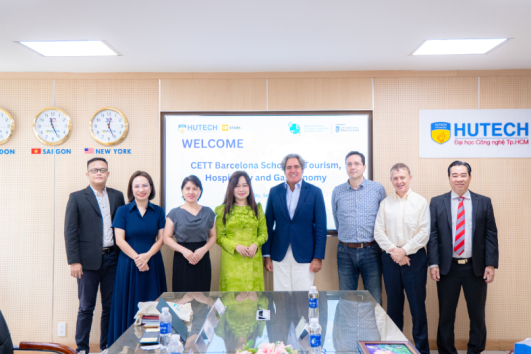
HUTECH and CETT connect strengths in service-related fields
The meeting between Ho Chi Minh City University of Technology (HUTECH) and CETT Barcelona School of Tourism, Hospitality and Gastronomy on...
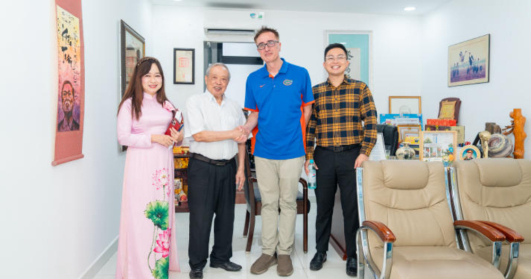
HUTECH welcomes U.S. scholar to advance teaching, research, and international learning experiences
As part of the Fulbright U.S. Scholar Program for the 2026-2027 academic year, Ho Chi Minh City University of Technology (HUTECH) welcomed Prof....