HUTECH graduate students explore spatial structural systems at Long Thanh Airport Terminal
- 17/06/2025
As part of the “Advanced Steel Structures” course, the field trip was led by Dr. Nguyen Van Giang, a faculty member specializing in Structural Engineering from HUTECH’s Faculty of Civil Engineering.
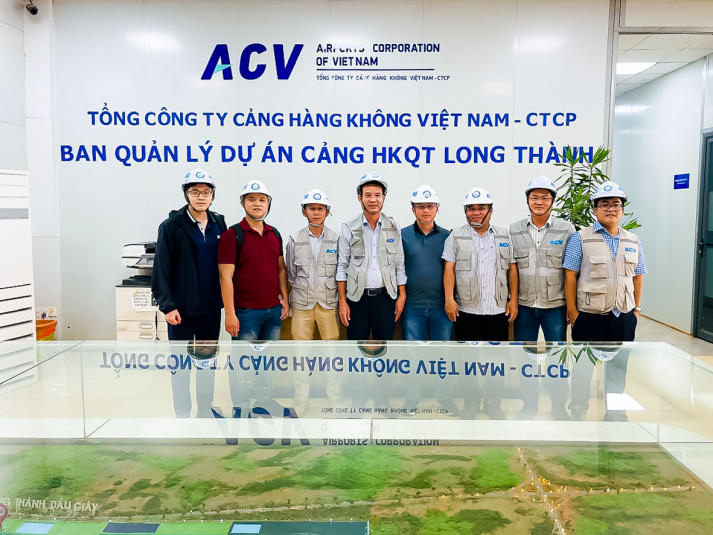
The Institute of Postgraduate Studies organized a field trip for Civil Rngineering students to the Long Thanh Airport construction site
At the construction site, students directly observed the assembly of the terminal’s steel roof structure, one of the most complex and large-scale engineering components in Phase 1 of the Long Thanh Airport project. This structural system has a total weight of 32,000 tons and is assembled from 256 nodes according to European standards, requiring high precision and synchronization during both fabrication and installation.
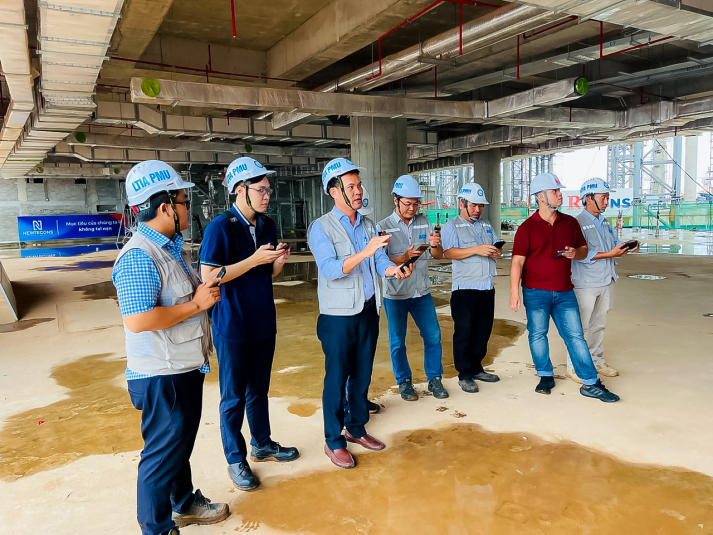
Students observed the assembly of the steel roof structure at the construction site
Notably, the roof lifting process uses a system of 56 synchronized hydraulic jacks, each capable of bearing 330 tons. This advanced lifting technology ensures evenly distributed force across all nodes, guaranteeing the
structure’s stability and safety throughout the process. In addition to the steel frame, students also examined the long-span reinforced concrete floor system integrated with MEP (Mechanical, Electrical, and Plumbing) systems. This type of structural organization is common in modern terminals and airports, where requirements for structural strength, spatial aesthetics, and multidisciplinary technical coordination must all be met.
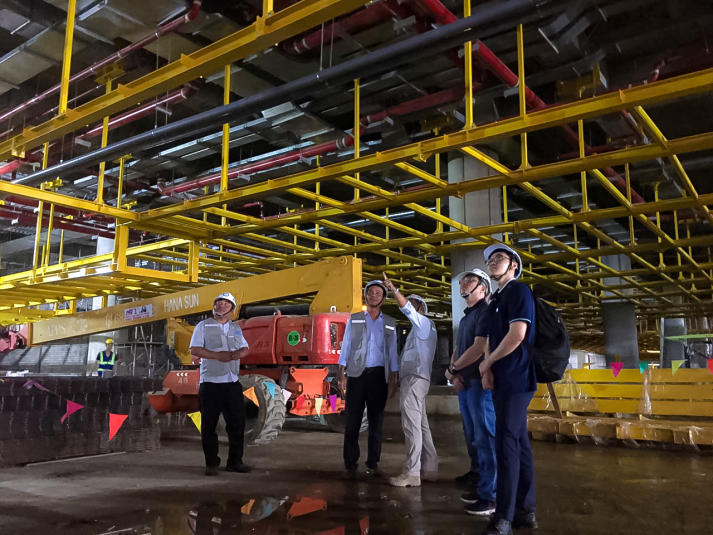
Students examined the long-span reinforced concrete floor system integrated with MEP systems
Through on-site analysis, students were able to compare different construction methods and evaluate the effectiveness of spatial structural systems under combined loads and Vietnam’s climate conditions. A new highlight of this trip was the opportunity for students to access and analyze technical documents via AI-integrated mobile apps, guided by their instructor. Technical specifications, structural drawings, and construction standards were quickly accessible, helping students better understand the design basis and implementation principles directly at the site.
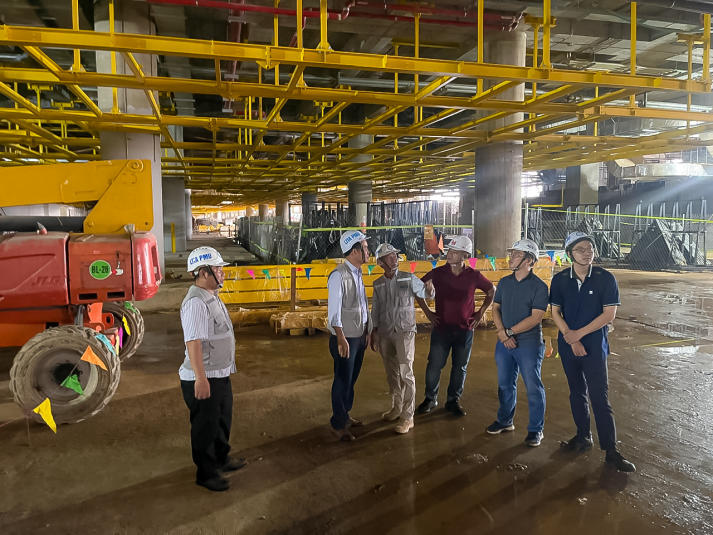
Field observation combined with expert interaction helped students gain valuable practical experience
The integration of field observation, digital data, and direct exchanges with project experts offered graduate students a comprehensive experience that was both visual and academically enriching. After the trip, students can apply what they learned to develop research topics related to spatial structure construction methods, heavy structure lifting techniques, performance assessment of steel-concrete composite systems, or optimization of construction processes through digital simulation technologies. The practical insights gained from the Long Thanh project also serve as a valuable foundation for students to take on roles as structural designers, consultants, or technical supervisors in major infrastructure projects both in Vietnam and the region.
Media Center