


VADA Next Forum 2026: Connecting Vietnamese and German experts to advance a sustainable healthcare system
- 16/10/2026
Developing proactive healthcare, strengthening primary care capacity, and advancing digital transformation were among the key issues discussed by Vietnamese and German experts at the international VADA Next Forum 2026, which opened on the morning of October 16 at the School of Medicine and Health Sciences, Ho Chi Minh City University of Technology (HUTECH).

Under the theme “The Future of Vietnam’s Healthcare System: Public Health, Digital Transformation, and Innovation,” the forum runs from October 16 to 17. It is jointly organized by HUTECH and the Network of Vietnamese Alumni of German Academic Institutions (VADA), with funding from the German Academic Exchange Service (DAAD). The event brings together experts, scientists, physicians, and representatives of educational institutions from both countries to exchange experiences and explore solutions to challenges facing the healthcare sector.
Speaking at the event, Assoc. Prof. Dr. Nguyen Thanh Hiep, MD, Meritorious Physician and Rector of HUTECH’s School of Medicine and Health Sciences, expressed his appreciation for the professors, leading experts, and generations of physicians who have contributed to healthcare in Vietnam, particularly those who studied or conducted research in Germany. He emphasized the value of connecting knowledge and sharing experience across generations to advance the country’s healthcare system.
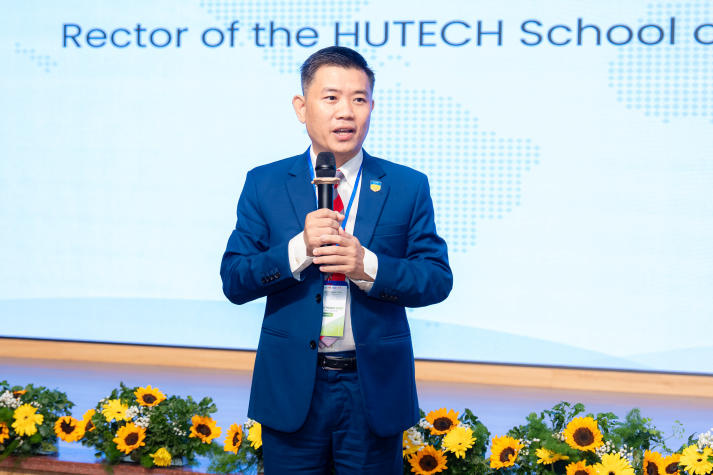
Assoc. Prof. Dr. Nguyen Thanh Hiep, MD, highlights the value of sharing knowledge and experience across generations of physicians
Opening the expert presentations, Dr. Jan Muenzer, MD, from the University Medical Center Freiburg, Germany, shared insights into the development of primary healthcare and family medicine. In response to population aging, this model emphasizes coordination among physicians, nurses, and families in caring for older adults, alongside prevention, health monitoring, rehabilitation, and palliative care.
Examples from Waldkirch, Germany, illustrated approaches to organizing community health services, home care, and long-term patient monitoring. A shortage of general practitioners has also highlighted the need to develop the healthcare workforce, allocate responsibilities appropriately, and adopt technology. These experiences offer useful insights for Vietnam as it strengthens its primary healthcare system.
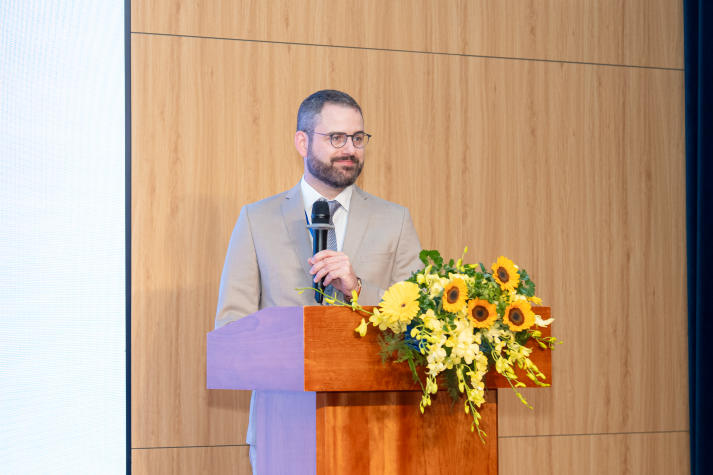
Dr. Jan Muenzer shares Germany’s experience in developing primary healthcare and family medicine
Addressing medical education and clinical care, Assoc. Prof. Dr Le Minh Khoi, MD, Head of the Department of Science and Training at the University Medical Center Ho Chi Minh City, explained the role of the integrated hospital and university model in combining patient care, workforce training, and scientific research.
His presentation also addressed the demands of clinical care and teaching, along with constraints on research resources and international collaboration. Stronger connections among hospitals, universities, and research organizations are needed to improve training quality and translate scientific findings into clinical practice.
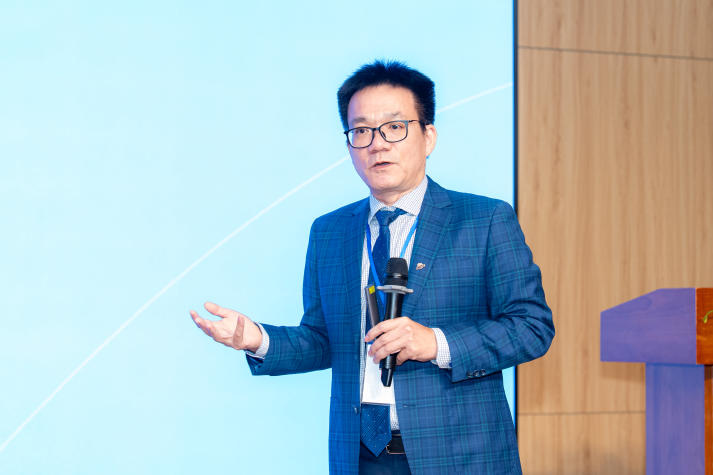
Assoc. Prof. Dr. Le Minh Khoi, MD, explains the integrated hospital and university model in patient care, education, and research
In his presentation on digital transformation, Assoc. Prof. Dr. Nguyen Thanh Hiep discussed the shift from reactive to proactive healthcare, with an emphasis on prevention and the early identification of health risks. Electronic health records, interoperable data, remote consultations, and artificial intelligence (AI) can help physicians monitor patients, assess their health, and make appropriate care decisions. Technology adoption must ensure transparency, privacy, and clinical oversight while preserving the central role of physicians.
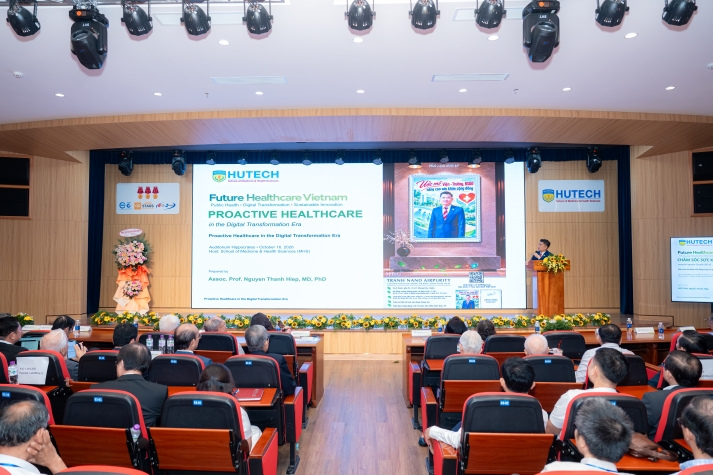
Assoc. Prof. Nguyen Thanh Hiep discusses the role of digital transformation in proactive healthcare
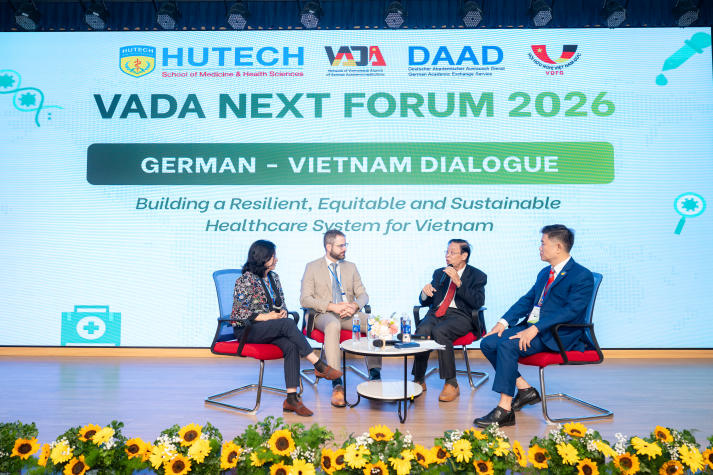
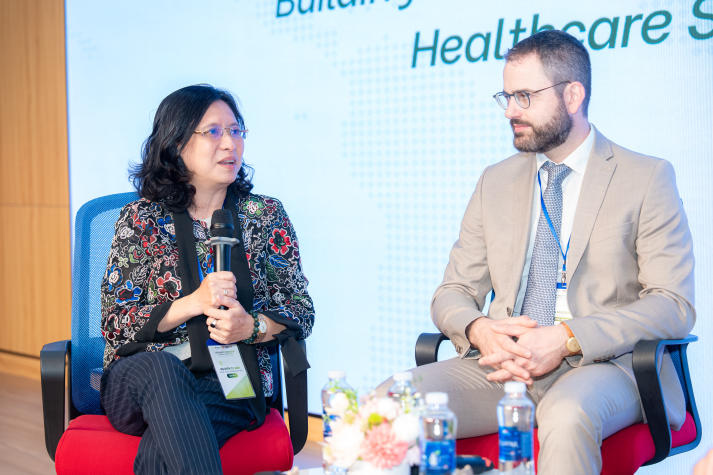
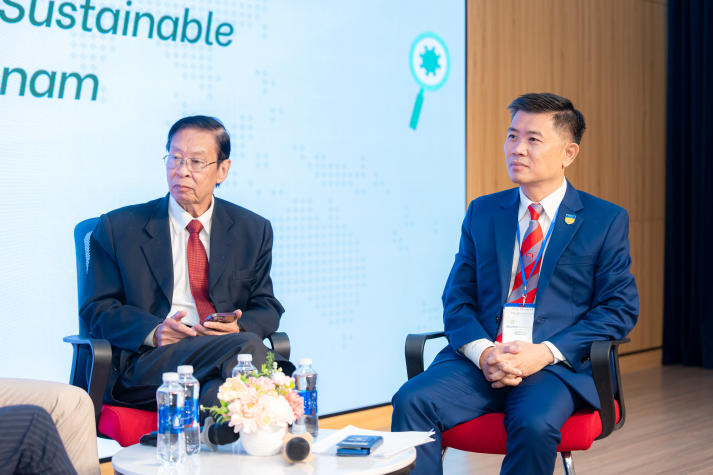
The issues raised in the presentations were explored further during the Germany–Vietnam Dialogue, themed “Building an Adaptive, Equitable, and Sustainable Healthcare System in Vietnam.” The panel featured Dr. Jan Muenzer, Assoc. Prof. Dr. Le Minh Khoi, Assoc. Prof. Dr. Nguyen Thanh Hiep, and Assoc. Prof. Dr. Nguyen Tu Anh, a pharmacist and DAAD alumna from the School of Pharmacy, University of Medicine and Pharmacy at Ho Chi Minh City. The discussion emphasized the early identification and management of risk factors, particularly for cardiovascular and chronic diseases, to prevent complications and reduce the treatment burden.
The experts also discussed health monitoring, guidance on medication use, and support for treatment adherence after hospital discharge. Family physicians play a key role in long-term health management, initial assessment, and referral to specialists when necessary, helping ensure continuity of care between hospitals and the community.
 |
 |
That afternoon, the forum continued with sessions on public health, healthcare, and treatment innovation, alongside scientific dialogue and opportunities to strengthen cooperation between Vietnam and Germany. These included:
- “Community Nutrition and Metabolic Disorders,” presented by Dr. Truong Hong Son, MD, and Ms. Le Thi Nga.
- “Healthcare Solutions for Vulnerable Populations,” presented by Assoc. Prof. Dr. Nguyen Thanh Binh, MD, and Assoc. Prof. Dr. Nguyen Thi Thanh Huong.
- “Regenerative Medicine and Treatment Innovation,” presented by Dr. Lam Tri Duc, MD, and Dr. To Viet Thuan, MD.
- A panel discussion titled “Scientific Dialogue for the Community: Education, Research, Innovation, and Social Contribution,” moderated by Dr. Bui Thi Thuy Nga.
On October 17, the program focuses on eye care in the digital age, the role of laboratory testing in disease screening, environmental factors associated with Parkinson’s disease, and a dialogue titled “The Future of Vietnam’s Healthcare System: From Challenges to Action.”
News: Mỹ Lệ
Photo: Quốc Đạt
Communication Center
Other news
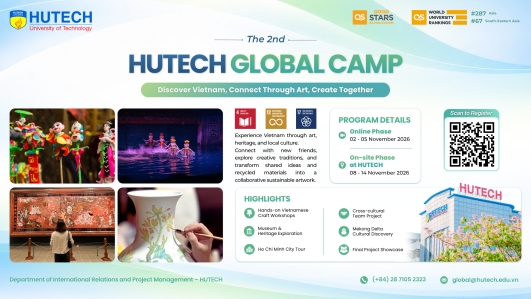
[Call for Participation] The 2nd HUTECH Global Camp
Ho Chi Minh City University of Technology (HUTECH) is pleased to announce the opening of applications for The 2nd HUTECH Global Camp, themed...

HUTECH initiative supporting persons with disabilities selected for international funding
Drawing on international knowledge and experience to develop community-focused initiatives, Ms. Nguyen Lan Huong, Head of the Department of...
Assoc. Prof. Dr. Thai Van Nam strengthens academic ties and expands cooperation with CGC University, Mohali, India
From October 5 to 9, Assoc. Prof. Dr. Thai Van Nam, Director of the Institute of Postgraduate Studies at Ho Chi Minh City University of Technology...
Dr. Ly Thien Trang shares how to put education for sustainable development into practice at UNESCO Chair Conference 2026
At the International UNESCO Chair Conference 2026 in Germany, Dr. Ly Thien Trang, Vice President of Ho Chi Minh City University of Technology...

Five HUTECH scientists named among the world’s top 2% of scientists in 2026
Five scientists from Ho Chi Minh City University of Technology (HUTECH) have recently been named among the world’s top 2% of scientists for 2026 in...
HUTECH lecturers strengthen their quantitative educational research skills with U.S. expert
Launched on 7 October, the training program “Exploring Quantitative Educational Research Methods: Introduction to Quantitative Educational Research...