


Learning Express 2026: Where youthful thinking meets Vietnamese heritage
- 07/04/2026
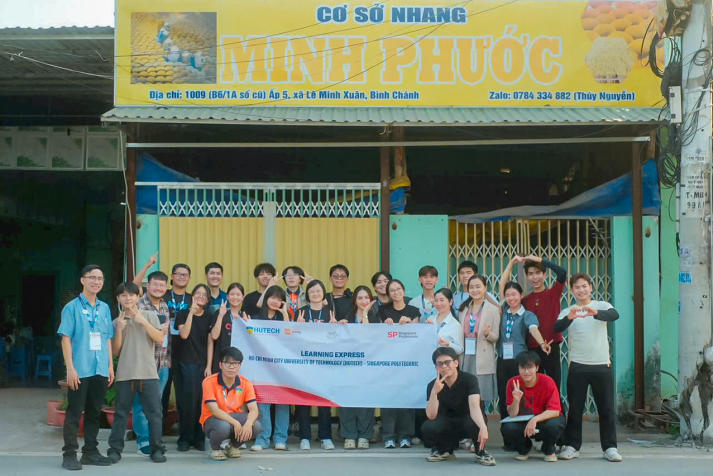
After 12 days of hands-on fieldwork, the community-based project Learning Express (LeX) 2026, organized by Ho Chi Minh City University of Technology (HUTECH) and Singapore Polytechnic (SP), has come to a close, leaving behind unforgettable impressions at the intersection of modern thinking and traditional cultural values.
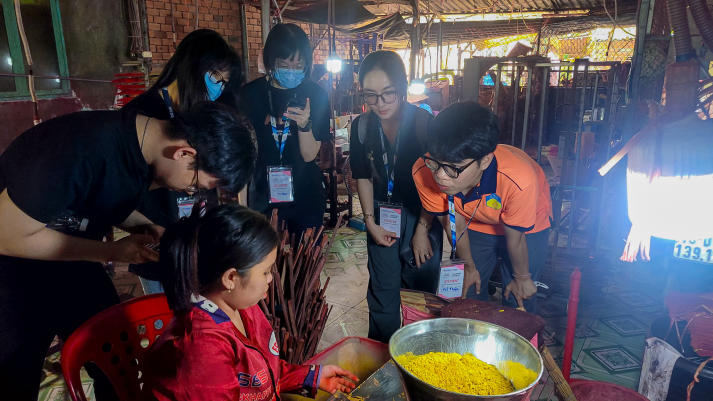
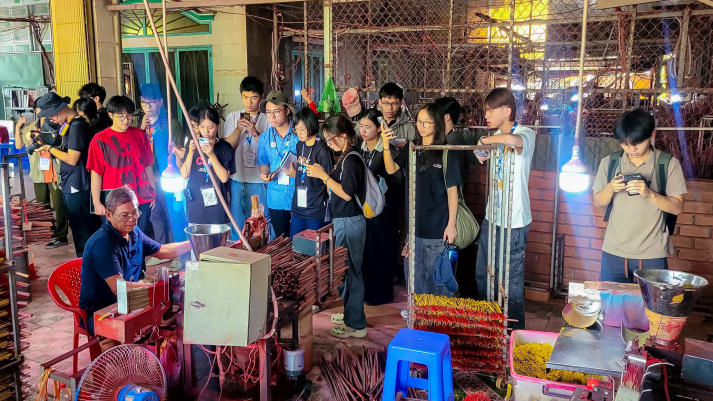
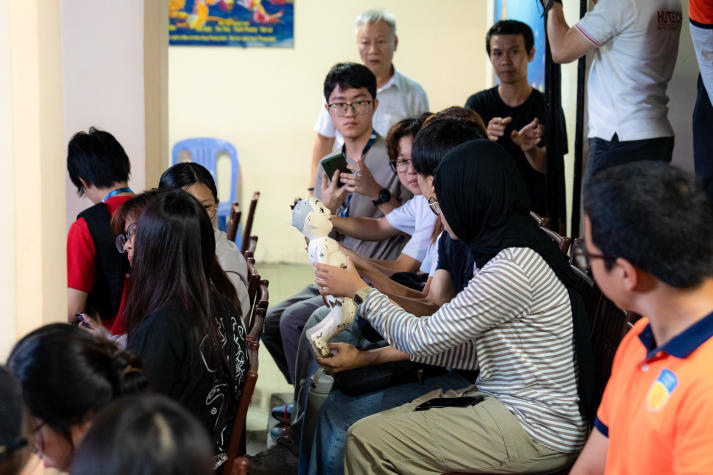
Held from March 23 to April 3, LeX 2026 brought together 60 students from the two institutions, divided into three main groups conducting on site research at Minh Phuoc Incense Workshop and the Rong Phuong Nam Water Puppetry Troupe. The students fully immersed themselves in local life, from learning how to roll incense sticks and drying them under the intense sun to stepping into the water stage to understand the challenges faced by water puppetry artists.
Held from March 23 to April 3, LeX 2026 brought together 60 students from the two institutions, divided into three main groups conducting on site research at Minh Phuoc Incense Workshop and the Rong Phuong Nam Water Puppetry Troupe. The students fully immersed themselves in local life, from learning how to roll incense sticks and drying them under the intense sun to stepping into the water stage to understand the challenges faced by water puppetry artists.
 |
 |
 |
 |
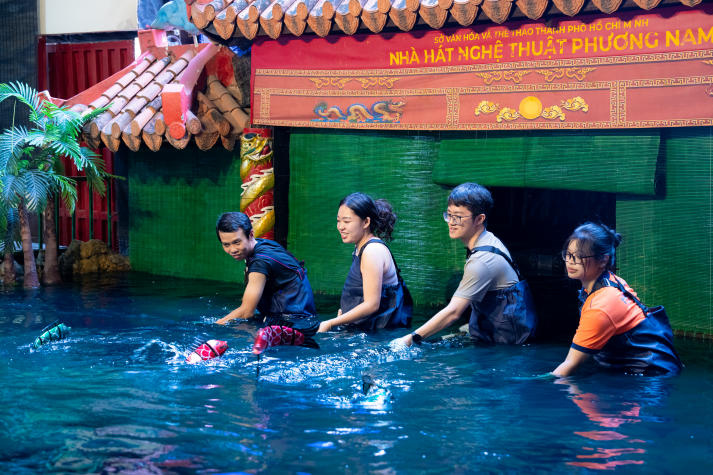
Students engage directly, listen to artisans, and explore real-world contexts to cultivate innovative solutions
In-depth discussions with artisans and careful observation of the local environment and operational processes enabled the groups to identify real barriers, forming the foundation for applying Design Thinking to develop breakthrough solutions.
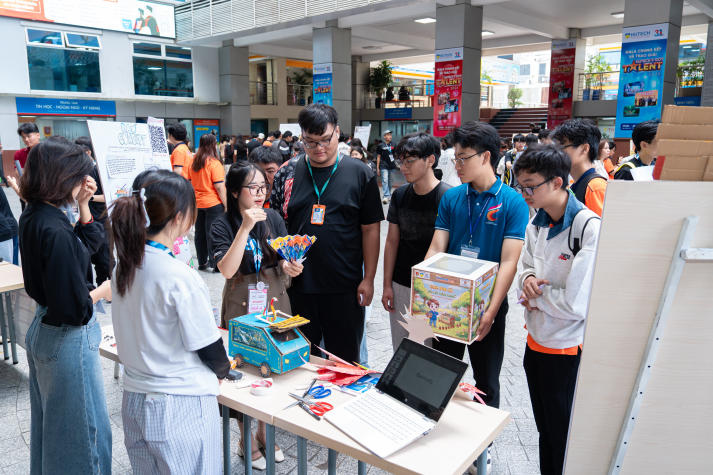
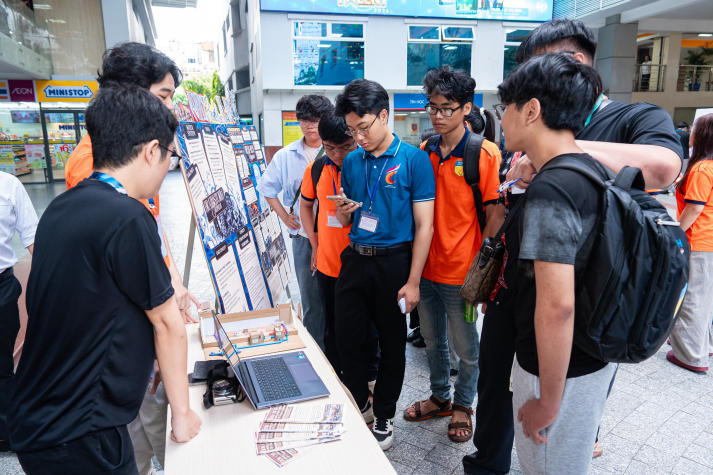
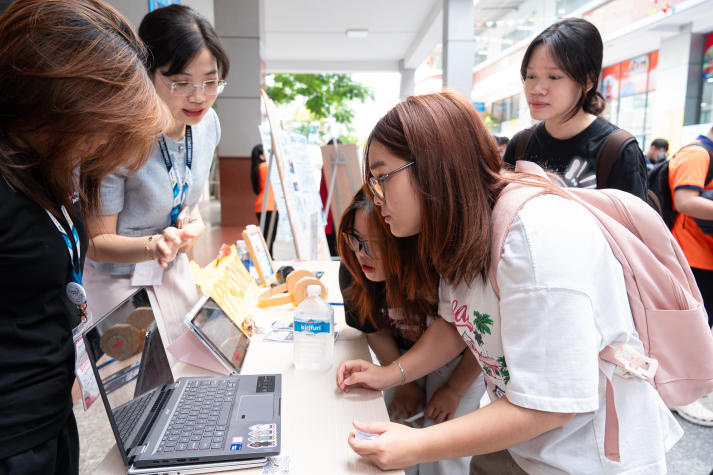
After a period of research, ideation, and implementation, the student teams officially showcased and presented their models and practical solutions on the morning of April 1.
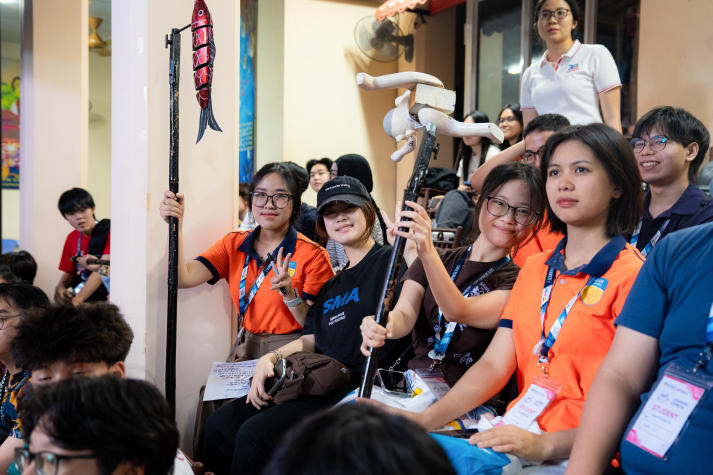
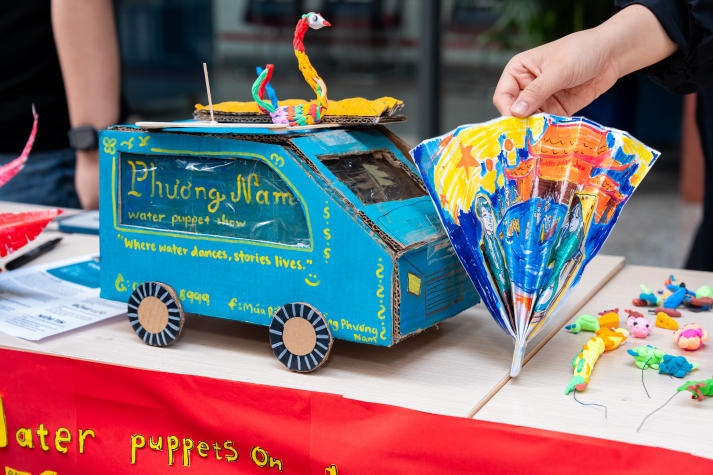
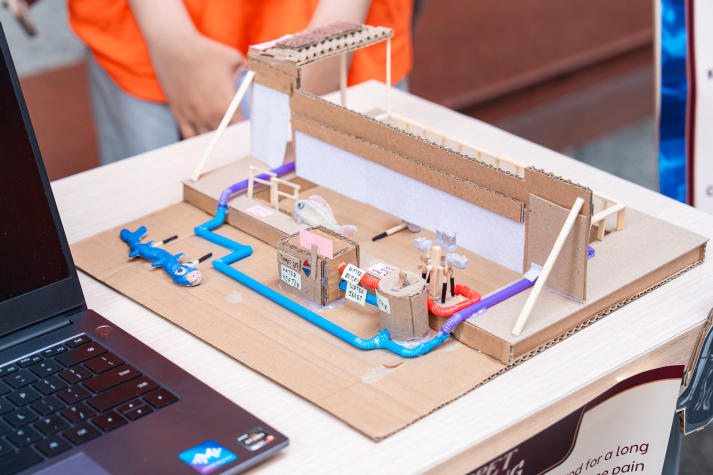
For water puppetry, the student groups approached the subject from multiple perspectives to help preserve and bring this traditional art form closer to the public. Groups 2A and 2B developed a mobile water puppetry model featuring a compact stage integrated with a mini water system, allowing performances to be staged in public spaces and attracting audiences to the traditional water stage.
After a period of research, ideation, and implementation, the student teams officially showcased and presented their models and practical solutions on the morning of April 1.
For water puppetry, the student groups approached the subject from multiple perspectives to help preserve and bring this traditional art form closer to the public. Groups 2A and 2B developed a mobile water puppetry model featuring a compact stage integrated with a mini water system, allowing performances to be staged in public spaces and attracting audiences to the traditional water stage.
 |
 |
 |
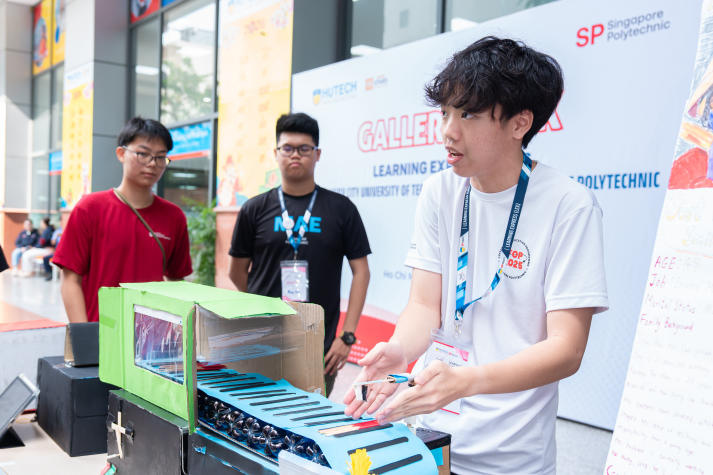 |
Meanwhile, Group 3A focused on occupational health and safety for artisans by developing a heating system integrated with water filtration to maintain stable temperatures and improve performance conditions. They also proposed soft rubber coatings for control rods to enhance grip and reduce strain on performers’ hands.
 |
 |
 |
 |
Solutions to protect artisans’ health and enhance multilingual accessibility in water puppetry
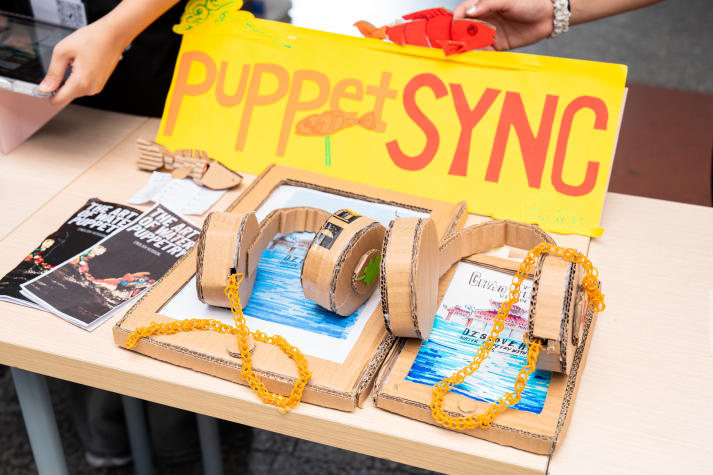
Notably, Group 3B made a strong impression with an audio-based translation solution that digitizes scripts into multiple languages. This helps overcome language barriers and allows international visitors to more fully appreciate the artistic and cultural value of Vietnamese water puppetry.
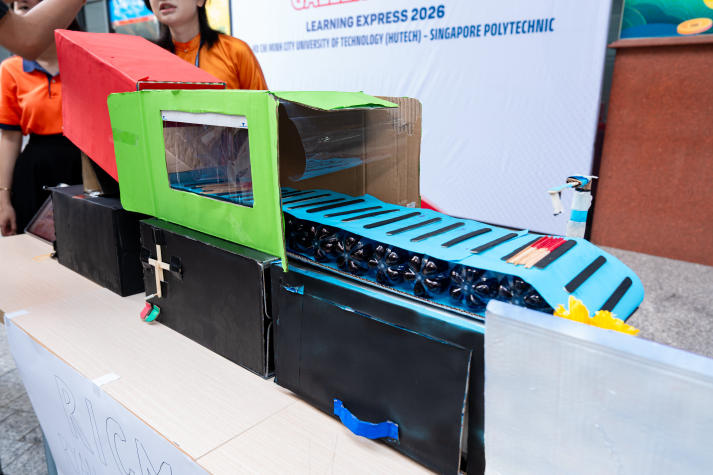
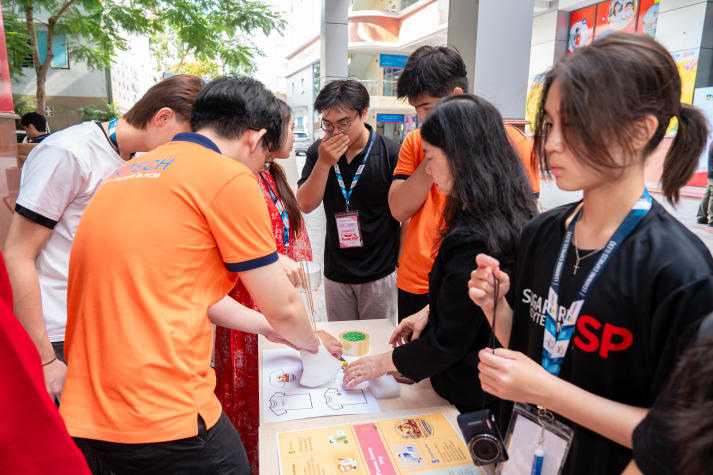
For the incense making craft village, solutions were developed to both optimize production processes and enhance brand value. Based on the reality that manual incense counting is labor intensive and prone to errors, Group 1A proposed an automatic counting machine using simple sensors to reduce packaging time and improve accuracy.
For the incense making craft village, solutions were developed to both optimize production processes and enhance brand value. Based on the reality that manual incense counting is labor intensive and prone to errors, Group 1A proposed an automatic counting machine using simple sensors to reduce packaging time and improve accuracy.
 |
 |
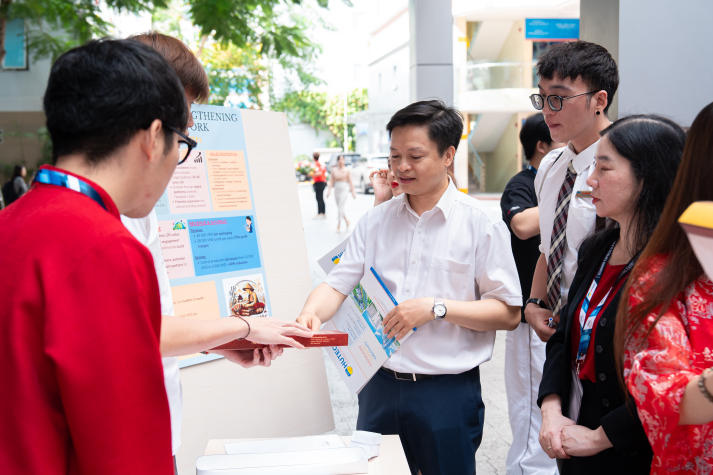
Automation and creative design solutions optimize production and elevate traditional incense craft value
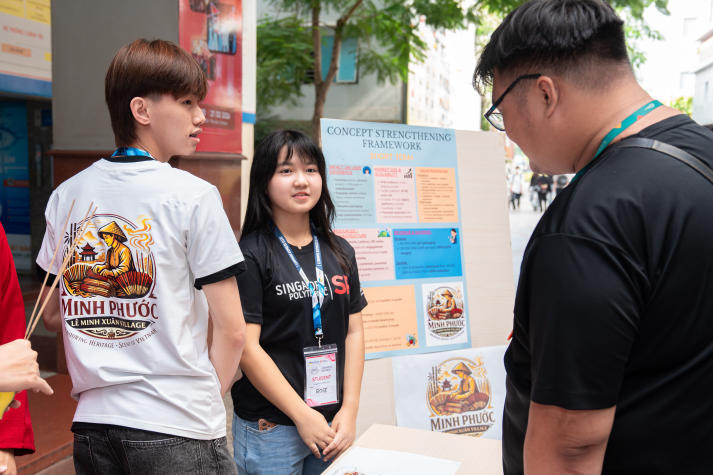
At the same time, Group 1B approached the challenge of developing the local craft economy through a distinctive merchandise set, ranging from recycled paper packaging to custom designed T-shirts. These products not only help professionalize the workshop’s image but also open up opportunities to increase revenue and create more jobs for local workers.
Sharing reflections on the meaningful journey, Pham Hoang Giang, a student in Automotive Engineering Technology, said, “Through this experience, I realized that Vietnamese heritage holds immense untapped potential, especially in connecting with the world. The journey also helped me strengthen my professional skills while deepening my understanding and pride in our core cultural values.”
Sharing reflections on the meaningful journey, Pham Hoang Giang, a student in Automotive Engineering Technology, said, “Through this experience, I realized that Vietnamese heritage holds immense untapped potential, especially in connecting with the world. The journey also helped me strengthen my professional skills while deepening my understanding and pride in our core cultural values.”
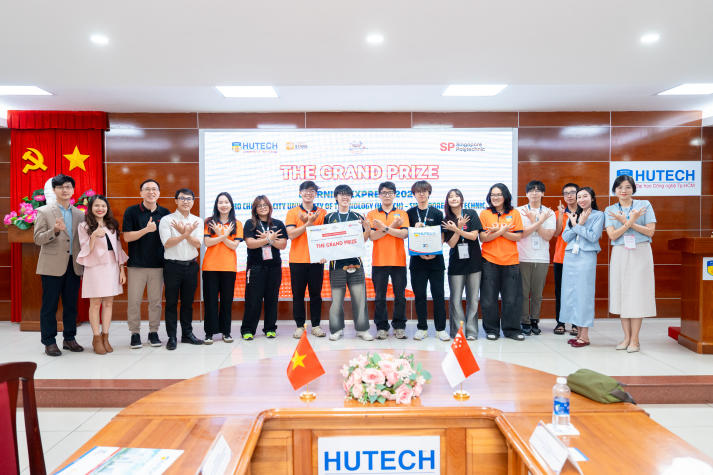
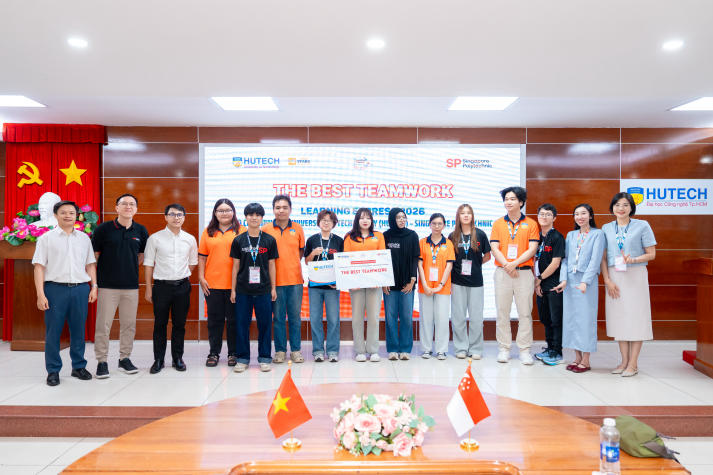
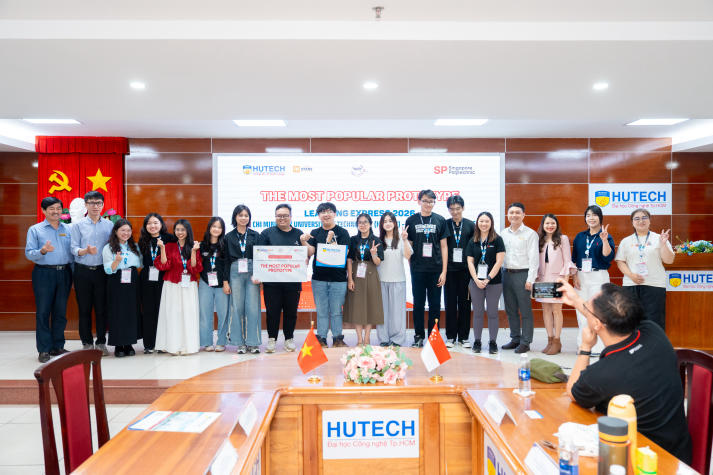
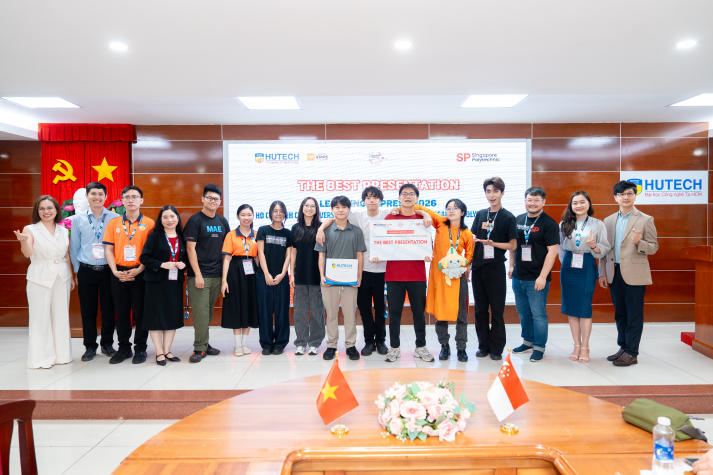
Final results of Learning Express 2026:
|
No.
|
Award
|
Group
|
Product
|
|
1
|
The Best Teamwork
|
3A
|
PPP
|
|
2
|
The Most Popular Prototype
|
2B
|
Water puppets on a Fan-tastic Van
|
|
3
|
The Best Presentation
|
1A
|
RICM- Ryan incense counting machine
|
|
4
|
The Most Creative Prototype
|
2A
|
Dance of water, Soul of people
|
|
5
|
The Most Practical Prototype
|
1B
|
Scent of Vietnam
|
|
6
|
Grand Prize
|
3B
|
PuppetSYNC
|
 |
 |
 |
 |
As the program concluded, students from both institutions continued their exchange through study visits to Ho Chi Minh City and the Mekong Delta, gaining deeper insights into Vietnamese culture, people, and daily life. Beyond studying and working together, the journey created meaningful real-world experiences that strengthened mutual understanding, connection, and lasting memories among Vietnamese and Singaporean students.
|
Based on the United Nations Sustainable Development Goals (SDGs), students from both countries researched and proposed practical solutions to address the challenge of preserving Vietnamese heritage:
Group 1 – Minh Phuoc Incense Workshop
SDG 3 (Good health and well-being): Improving production processes to help artisans protect their health and enhance productivity. SDG 8 (Decent work and economic growth): Supporting sustainable development of craft villages and expanding income opportunities.
SDG 11 (Sustainable cities and communities): Minimizing environmental impact in production while preserving traditional values.
Group 2 and 3 - Rong Phuong Nam Water Puppetry Troupe SDG 8 (Decent work and economic growth): Improving working conditions for artisans to sustain their craft and promoting modern communication strategies to attract young audiences and tourists. SDG 11 (Sustainable cities and communities): Digitizing visitor experiences and building a stable and authentic cultural brand.
SDG 12 (Responsible consumption and production): Applying modern technology as a lever for promotion while preserving core heritage values.
|
News: Bích Nhã
Photo: Anh Khoa
Communication Center
Other news
[Call for Participation] The 2nd HUTECH Global Camp
Ho Chi Minh City University of Technology (HUTECH) is pleased to announce the opening of applications for The 2nd HUTECH Global Camp, themed...
Chinese Consulate General awards scholarships to support HUTECH students in Chinese Studies
On October 14, Ho Chi Minh City University of Technology (HUTECH) held a ceremony to present scholarships from the Chinese Consulate General in Ho...
VADA Next Forum 2026: Connecting Vietnamese and German experts to advance a sustainable healthcare system
Developing proactive healthcare, strengthening primary care capacity, and advancing digital transformation were among the key issues discussed by...
HUTECH and the University of the Fraser Valley explore study and research opportunities in Canada
On October 12, Ho Chi Minh City University of Technology (HUTECH) met with the University of the Fraser Valley (UFV), Canada, to explore...
HUTECH and Northern Arizona University explore study opportunities in the United States
Joint degree pathways following the 2+2 and 3+1 models, along with student exchange programmes, were the focus of a meeting on October 12 between...
HUTECH initiative supporting persons with disabilities selected for international funding
Drawing on international knowledge and experience to develop community-focused initiatives, Ms. Nguyen Lan Huong, Head of the Department of...