


HUTECH students broaden perspectives on clean energy transition and sustainable development
- 27/05/2026
From the challenge of global energy consumption to the Net Zero movement, the workshop “Clean Energy Transitions: Problem, Challenges and Way Forward” provided students at Ho Chi Minh City University of Technology (HUTECH) with deeper insights into the role of clean energy, green technologies, and emerging career opportunities in sustainable development.
Organized by the Department of International Relations and Project Management in collaboration with the Institute of Engineering on May 25, the workshop was led by Prof. Ashish Garg, Head of the Department of Sustainable Energy Engineering at the Indian Institute of Technology Kanpur. The session offered students practical perspectives on energy consumption, climate change, and the global transition toward clean energy.
Organized by the Department of International Relations and Project Management in collaboration with the Institute of Engineering on May 25, the workshop was led by Prof. Ashish Garg, Head of the Department of Sustainable Energy Engineering at the Indian Institute of Technology Kanpur. The session offered students practical perspectives on energy consumption, climate change, and the global transition toward clean energy.
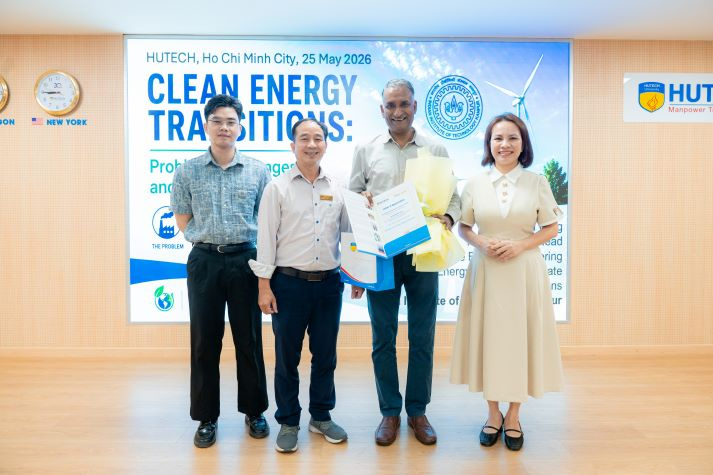
Representatives of the organizing committee presented a token of appreciation to the speaker
At the beginning of the workshop, Professor Ashish Garg analyzed several pressing issues in today’s global energy landscape. Energy demand continues to rise rapidly due to industrialization, urbanization, the expansion of transportation systems, and increasing expectations for quality of life. However, the majority of the world’s energy supply still relies heavily on fossil fuels such as coal, oil, and natural gas.
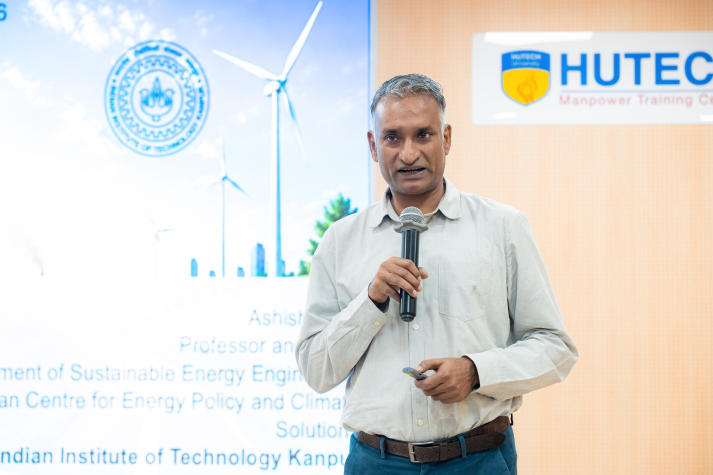
Prof. Ashish Garg discussed current energy challenges and the world’s dependence on fossil fuels
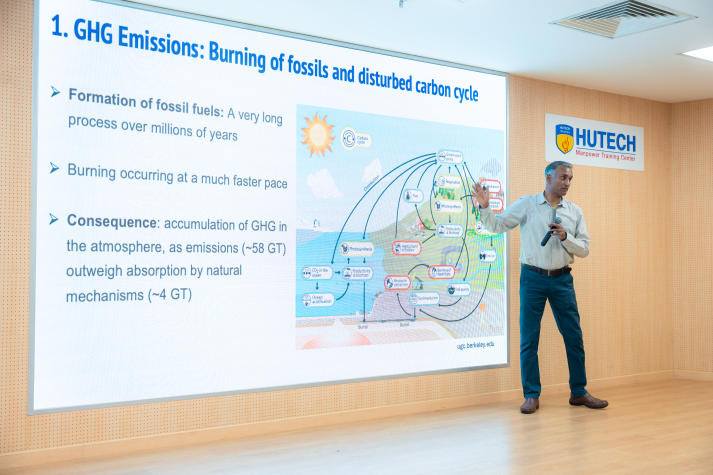
The prolonged extraction and use of these energy sources have caused significant environmental consequences. Large carbon emissions generated by manufacturing, transportation, and industrial activities are among the leading causes of the greenhouse effect, climate change, and the depletion of natural resources.
Against this backdrop, the workshop emphasized the urgent need for energy transition. According to the speaker, energy transition is not simply about replacing fossil fuels with clean energy sources, but about fundamentally transforming the way energy is produced, distributed, and consumed.
 |
 |
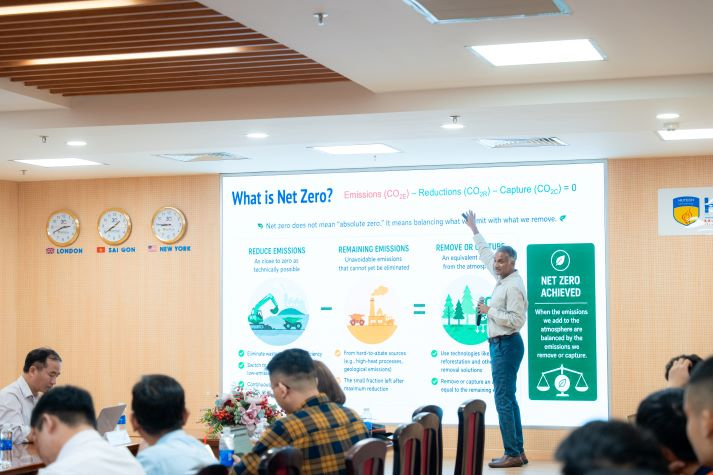
The workshop highlighted the urgency of energy transition in response to the impacts of fossil fuels
This process involves several key solutions, including reducing carbon emissions, promoting electrification in transportation and industry, improving energy efficiency, and developing green growth policies. In particular, the Net Zero goal was introduced as an important direction for future energy strategies, aiming to balance the amount of greenhouse gases emitted with the amount absorbed or removed from the environment.
In addition to the broader overview, students were introduced to clean energy technologies that currently play a central role in the transition process, including solar energy, wind power, energy storage systems, clean fuels, and carbon capture, utilization, and storage technology (CCUS).
 |
 |
 |
 |
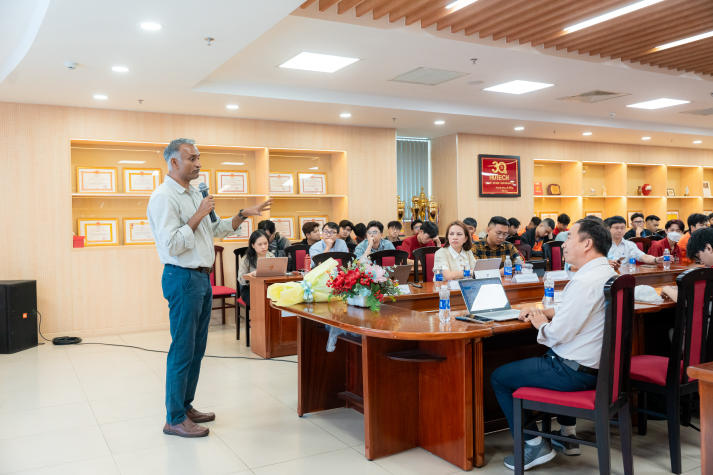
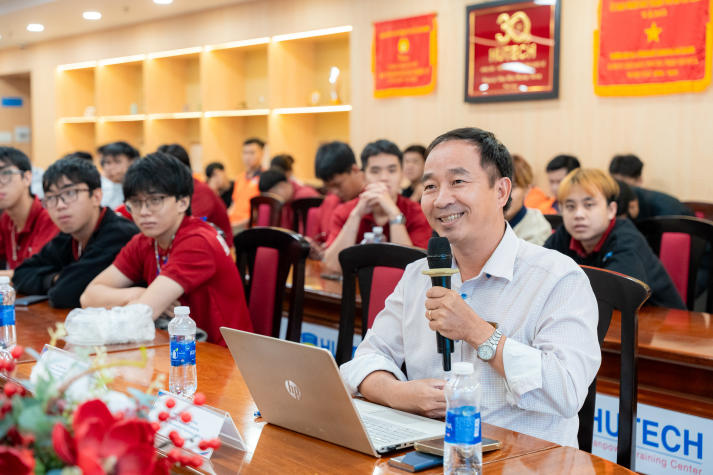
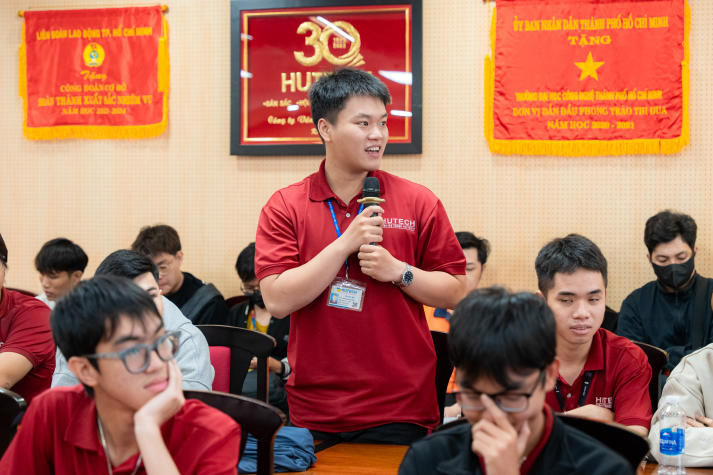
Faculty members and students engaged in discussions with the speaker on energy and sustainable development issues
These technologies contribute to emission reduction while also laying the foundation for the growth of future green industries. In particular, CCUS technology is considered a promising solution for capturing CO₂ emissions from industrial plants before they are released into the atmosphere, thereby helping mitigate negative impacts on the global climate.
The workshop also helped students recognize that the clean energy transition presents not only opportunities but also significant challenges. One notable issue is the growing dependence on supply chains for critical materials such as lithium, nickel, and rare earth elements, which are essential for batteries, storage systems, and many emerging energy technologies.
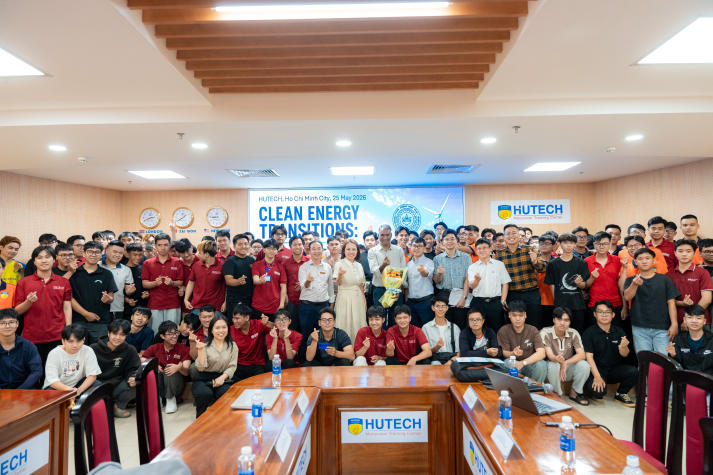
The workshop provided students with practical perspectives on energy consumption, climate change, and global clean energy transition trends
Through these discussions, students gained a more practical understanding of the relationship between technology, the environment, policy, and the labor market. Energy transition is no longer a distant concept, but one that is directly creating new demand for human resources in fields such as engineering, green technology, renewable energy, environmental management, and sustainable development.
News: Bảo Phúc
Photo: Hoàng Thanh
Communication Center
News: Bảo Phúc
Photo: Hoàng Thanh
Communication Center
Other news
HUTECH releases 2025 Sustainability Report
Ho Chi Minh City University of Technology (HUTECH) has officially released its 2025 Sustainability Report, offering a comprehensive overview of the...

HUTECH expands international cooperation ecosystem in semiconductors with Minghsin University of Science and Technology
With the goal of expanding international learning and career development opportunities for students, Ho Chi Minh City University of Technology...

HUTECH signs MoU with Qingdao Huanghai University to expand academic exchange opportunities for Engineering, Technology, and Civil Engineering students
On May 14, Ho Chi Minh University of Technology (HUTECH) officially signed a Memorandum of Understanding with Qingdao Huanghai University, marking...

HUTECH connects 17 universities at ICE 2026, spreading action for sustainable tourism
The 2nd ICE International Cultural Exchange 2026 concluded with the participation of 17 universities and educational institutions from multiple...
HUTECH equips faculty and staff with collaborative leadership skills for sustainable development
From understanding the nature of conflict to developing collaborative leadership mindsets, the Workshop on Collaborative Leadership and Conflict...
HUTECH ready for official MOET assessment following preliminary site visit for three master’s programs
On May 20, Ho Chi Minh City University of Technology (HUTECH) welcomed the evaluation team from the Center for Education Accreditation under...