


HUTECH explores new perspectives on sustainable tourism in its 2026-2027 Online Expert Talk Series
- 05/11/2026
Behind a traditional food product are the people who make a living from it, the local knowledge that goes into making it, and the cultural values passed down through generations. This connection was the focus of the October session of the 2026-2027 Online Expert Talk Series, hosted online by Ho Chi Minh City University of Technology (HUTECH) on October 29.
Titled “Beyond Green: Rethinking Sustainability in Tourism, Hospitality, and Culinary Heritage,” the session brought together 28 experts, faculty members, professionals, and students from India, the Philippines, Taiwan, Denmark, and Vietnam. The discussion explored how tourism and hospitality can support local communities and preserve culinary heritage while pursuing economic and environmental goals.

The session brought together 28 participants from Vietnam and abroad to discuss sustainable tourism
Dr. Kathleen G. Apilado, Dean of the College of Hospitality and Tourism Management and Chair of the SDG Committee at José Rizal University in the Philippines, outlined four dimensions of sustainability: social equity, cultural continuity, economic resilience, and environmental protection. She explained that tourism and hospitality practitioners need to consider all four together to ensure that their activities benefit local communities.
Using traditional sea salt making in the Philippines as an example, Dr. Apilado illustrated how preserving culinary heritage also helps sustain livelihoods and keep local knowledge alive. Keeping the craft alive means supporting the people who make the salt and ensuring they can pass their skills on to future generations.
Using traditional sea salt making in the Philippines as an example, Dr. Apilado illustrated how preserving culinary heritage also helps sustain livelihoods and keep local knowledge alive. Keeping the craft alive means supporting the people who make the salt and ensuring they can pass their skills on to future generations.
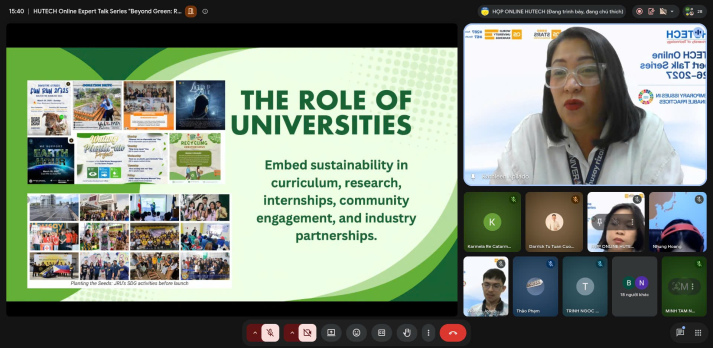
Dr. Kathleen G. Apilado discusses the four dimensions of sustainability
For hospitality businesses, Dr. Apilado emphasized responsible sourcing, giving credit to the communities behind the products, and building fair partnerships with producers. The discussion highlighted how sourcing decisions can help ensure that producers benefit and local cultural traditions are preserved.

Dr. Apilado answers questions and discusses the session’s key topics with participants
In higher education, Dr. Apilado suggested ways universities could integrate sustainability into teaching, research, industry partnerships, and community engagement. These efforts can help faculty, researchers, and students examine real-world issues from economic, social, and cultural perspectives and consider the interests of local communities when developing new initiatives.
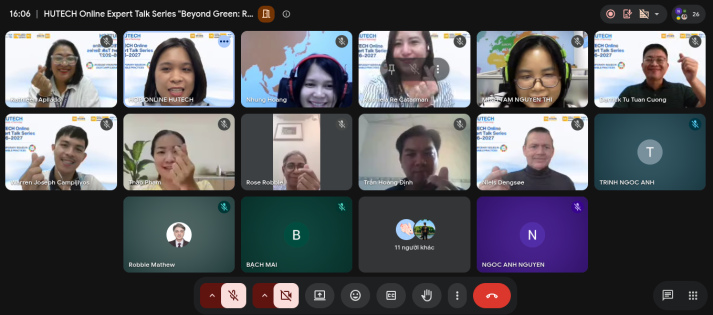
The session strenghens international academic ties and brings together different perspectives on contemporary issues
The 2026-2027 Online Expert Talk Series is a 12-month international academic program running from September 2026 through August 2027. It features 12 international speakers under the theme “Contemporary Issues in Sustainable Practices.” The October session continued to foster cross-cultural academic exchange at HUTECH and offered practical ways to pursue economic goals, uphold social responsibilities, and preserve local identity.
News: Mỹ Lệ
Photo: Department of International Relations and Project Management
Communication Center
Other news
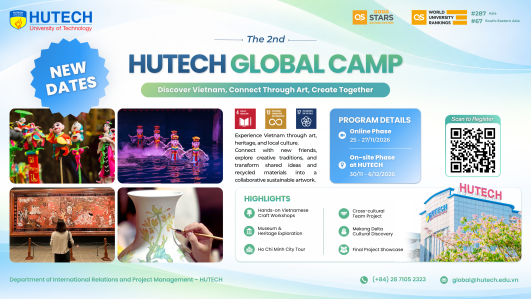
[NEW DATES ANNOUNCED] The 2nd HUTECH Global Camp 2026
Ho Chi Minh City University of Technology (HUTECH) is pleased to announce the opening of applications for The 2nd HUTECH Global Camp, themed...
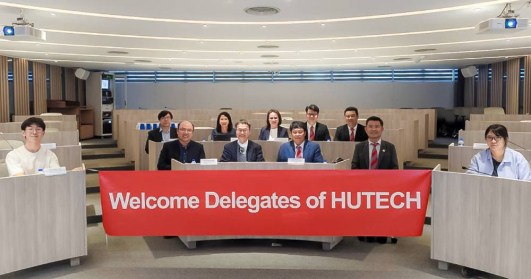
HUTECH strengthens ties with China Medical University in health sciences education and research
As part of its efforts to expand international collaboration in medicine, a leadership delegation from Ho Chi Minh City University of Technology...
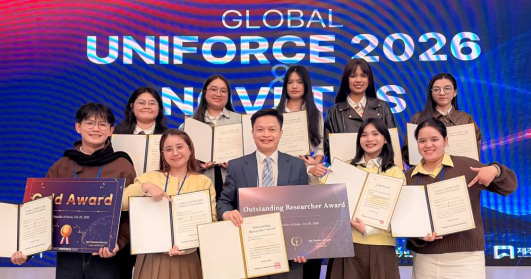
HUTECH brings research and student innovation to South Korea, winning two international awards
A delegation from Ho Chi Minh City University of Technology (HUTECH) brought research and student-led ideas for sustainable development to GLOBAL...
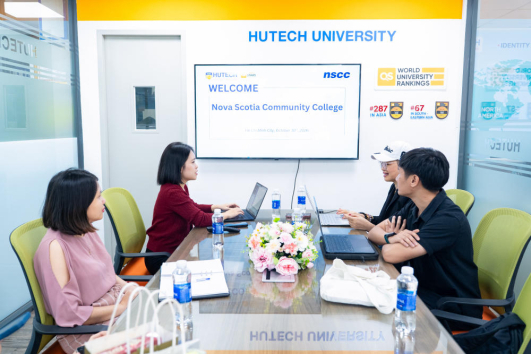
HUTECH and Nova Scotia Community College advance partnership to expand study and internship opportunities in Canada
Scholarships, joint academic programs, and paid internships in Canada were the focus of an October 30 meeting between Ho Chi Minh City University...
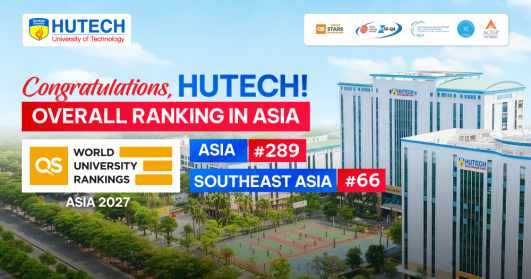
HUTECH ranks 289th in Asia and 66th in Southeast Asia in the QS Asia University Rankings 2027
Ho Chi Minh City University of Technology (HUTECH) ranked 289th in Asia and 66th in Southeast Asia, while retaining its position as Vietnam’s sixth...
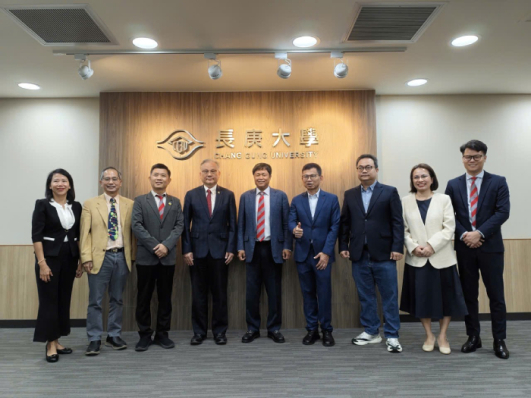
HUTECH partners with Chang Gung University to expand medical learning opportunities in Taiwan, China
On October 29, Ho Chi Minh City University of Technology (HUTECH) visited Chang Gung University (CGU) in Taiwan, China, for a meeting and signed a...