


HUTECH representatives update internationalization strategies for the next phase of higher education
- 24/07/2026
From emerging trends in transnational education to institutional strategies for global engagement, the training program Glocalising Education in Viet Nam for the Emerging Era: Think Global, Act Local provided representatives of Ho Chi Minh City University of Technology (HUTECH) with fresh perspectives, practical insights, and strategic direction to strengthen sustainable and impactful international cooperation.
The two-day program was held on 16 and 17 July and was jointly organized by the Ministry of Education and Training, the British Council, and the Asia Pacific Association for International Education (APAIE). Representing HUTECH were Dr. Ly Thien Trang, Vice President, and Ms. Nguyen Lan Huong, Head of the Department of International Relations and Project Management.
The two-day program was held on 16 and 17 July and was jointly organized by the Ministry of Education and Training, the British Council, and the Asia Pacific Association for International Education (APAIE). Representing HUTECH were Dr. Ly Thien Trang, Vice President, and Ms. Nguyen Lan Huong, Head of the Department of International Relations and Project Management.
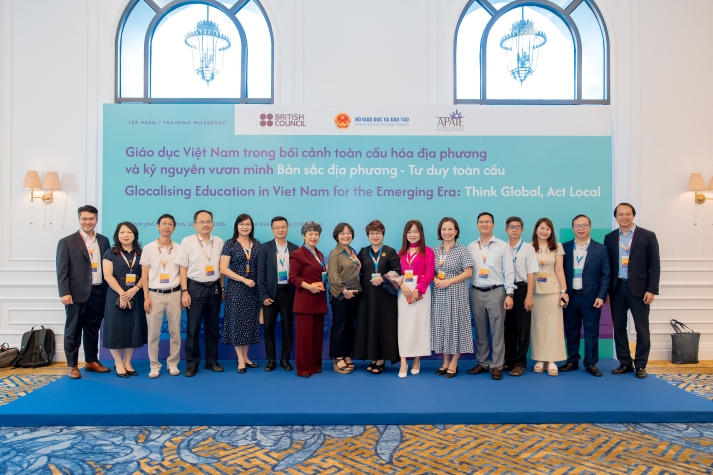
HUTECH representatives attend the training program jointly organized by the Ministry of Education and Training, the British Council, and APAIE
During the program, Assoc. Prof. Dr. Nguyen Thu Thuy, Director General of the International Cooperation Department under the Ministry of Education and Training, emphasized that the internationalization of higher education should now be regarded as a core institutional capability. She noted that the true value of internationalization lies not in the number of partnership agreements or exchange programs, but in its ability to enhance the quality of education and research while creating meaningful benefits for students, universities, and society.
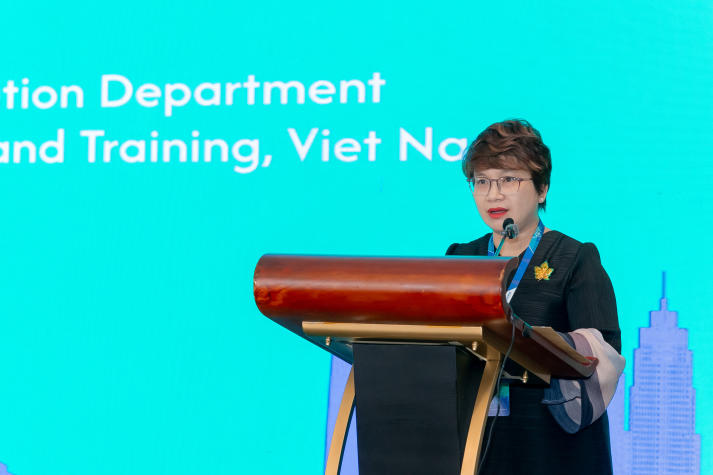
Assoc. Prof. Dr. Nguyen Thu Thuy shares insights on sustainable internationalization in higher education
Under the theme Think Global, Act Local, the training explored emerging developments in Transnational Education (TNE), evolving models of higher education collaboration, Vietnam's policy landscape, and strategies for building global engagement at the institutional level.
Participants also received updates on policies related to academic partnerships, the development of internationally oriented higher education institutions, high quality workforce development, international collaboration in research, and doctoral education. Quality assurance was highlighted as a key foundation for ensuring that internationalization is implemented sustainably, responsibly, and in alignment with each institution's strategic priorities.
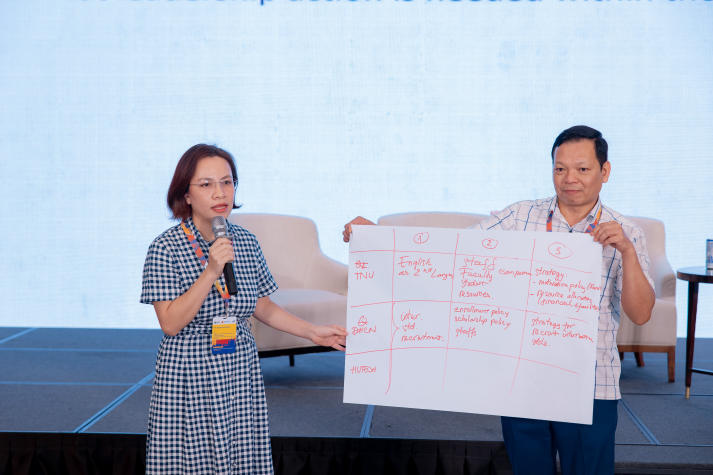
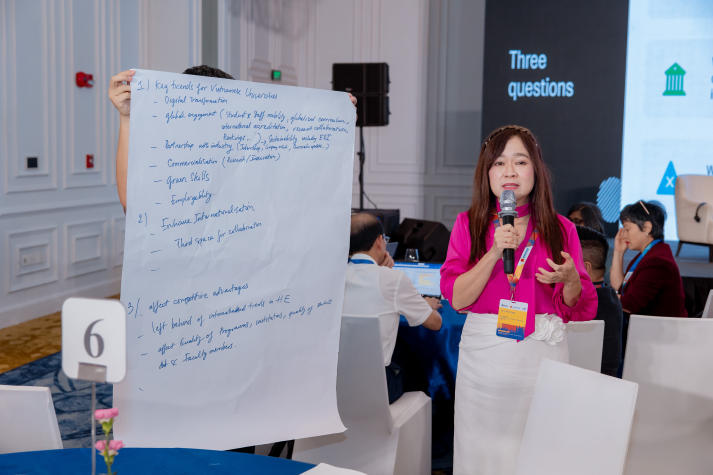
A key focus of the program was developing institution wide global engagement strategies. Participants discussed the distinction between internationalization and global engagement strategies, the essential pillars of an effective institutional framework, and ways to balance international aspirations with local missions, academic strengths, and student interests.
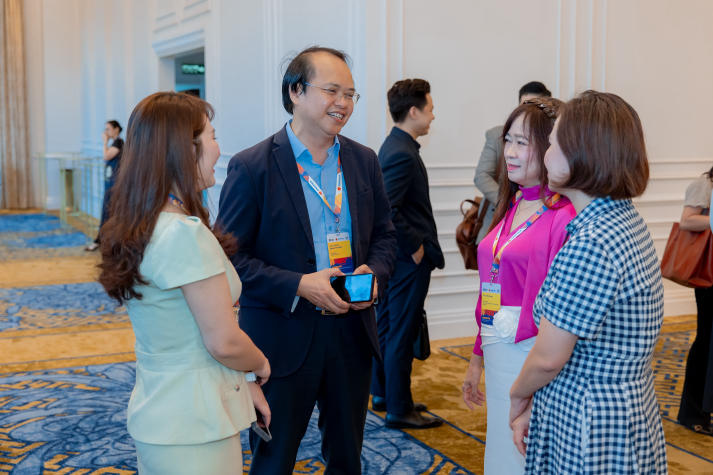
Participants exchange ideas on institutional global engagement strategies
The training also introduced practical approaches to enhancing the experience of international students, attracting global students, academics, and researchers, and promoting Vietnam as a high-quality study destination in the region. Participants further explored models of international collaboration that are practical, impactful, and sustainable.
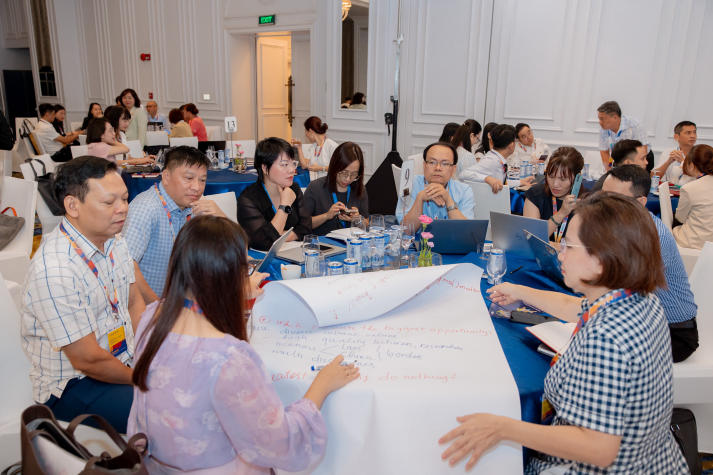
 |
 |
HUTECH representatives actively participate in discussions and internationalization planning sessions
Through interactive group discussions and action planning sessions, the program enabled representatives from higher education institutions to better identify both opportunities and challenges in the internationalization process. It also strengthened their capacity for strategic analysis, planning, and implementing international cooperation initiatives that respond to the unique context and priorities of each institution.
On the second day of the program, discussions continued with a focus on the role of international organizations such as APAIE in supporting higher education internationalization. Additional sessions addressed student wellbeing and mental health when working with international students, as well as strategies for enhancing the academic and campus experience of learners from diverse cultural backgrounds.
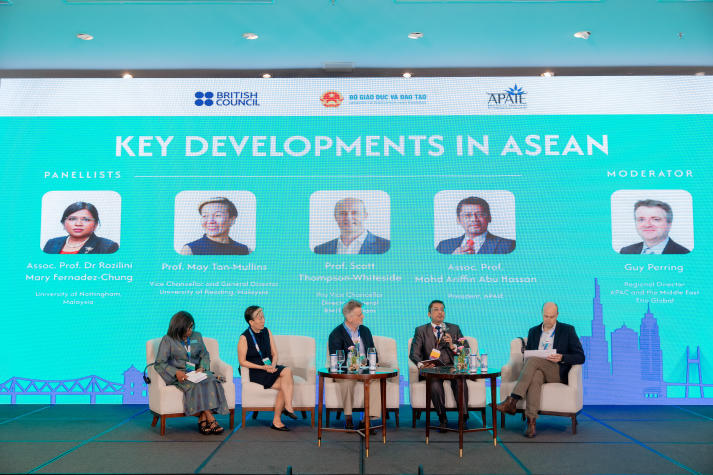
Experts share strategies for enhancing the academic and campus experience of students from around the world
One of the program's key messages was that internationalization should move beyond expanding the number of activities toward creating deeper impact. Institutions were encouraged to shift from signing agreements to implementing meaningful partnerships, from isolated initiatives to comprehensive strategies, and from passive participation to equitable collaboration built on shared responsibility and mutual value creation.
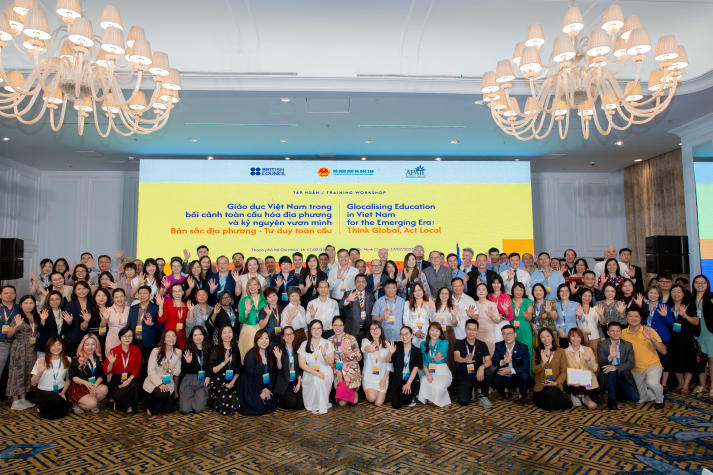
The program lays the foundation for sustainable partnerships that create lasting value for students, faculty, research, and the wider community
By participating in the program, HUTECH gained valuable insights into the latest developments in higher education internationalization, learned from leading experts and educational organizations in Vietnam and abroad, and expanded its international network. These experiences will support the University in strengthening international cooperation through a more strategic, impactful, and sustainable approach that delivers long term value for students, faculty members, research activities, and the broader community.
News: Mai Ly
Photo: Department of International and Project Management
Communication Center
Other news
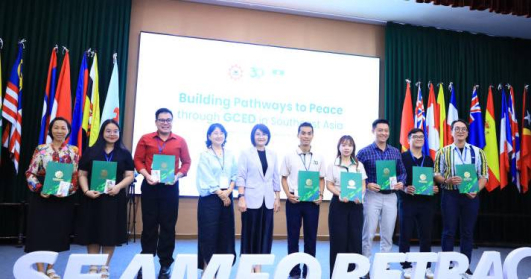
HUTECH representative gains international insights into global citizenship education
From September 8 to 10, Mr. Vo Quoc Dai, Vice Dean of the Faculty of English Language at Ho Chi Minh City University of Technology (HUTECH),...
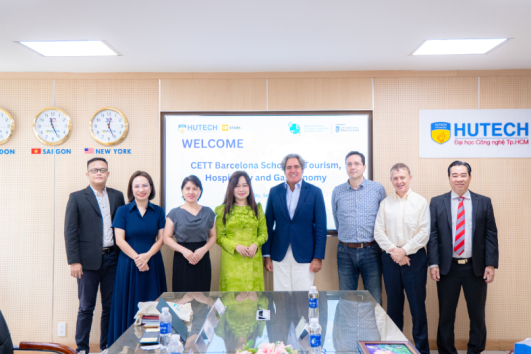
HUTECH and CETT connect strengths in service-related fields
The meeting between Ho Chi Minh City University of Technology (HUTECH) and CETT Barcelona School of Tourism, Hospitality and Gastronomy on...
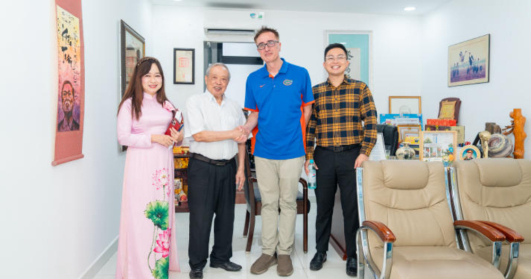
HUTECH welcomes U.S. scholar to advance teaching, research, and international learning experiences
As part of the Fulbright U.S. Scholar Program for the 2026-2027 academic year, Ho Chi Minh City University of Technology (HUTECH) welcomed Prof....
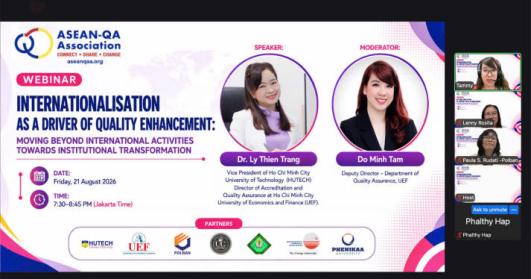
Dr. Ly Thien Trang proposes a new direction for university internationalization, expanding cooperation and driving quality transformation
Internationalization is increasingly being viewed in connection with the need to enhance the quality of higher education. At an international...
HUTECH meets with leaders of Santiago de Cuba Province to expand educational connections in Latin America
On September 9, Ho Chi Minh City University of Technology (HUTECH) held a meeting with a delegation of leaders from Santiago de Cuba Province,...
HUTECH and Queensland University of Technology (Australia) explore research collaboration in materials and sustainable energy
Building on shared research interests, Ho Chi Minh City University of Technology (HUTECH) and Queensland University of Technology (QUT), Australia,...