


VJIT Director brings university–business co-creation model to the startup and SME community in Ho Chi Minh City
- 12/08/2026
When real business challenges are connected with the knowledge, research, and creativity resources of universities, ideas gain more opportunities to be tested, refined, and brought closer to the market.
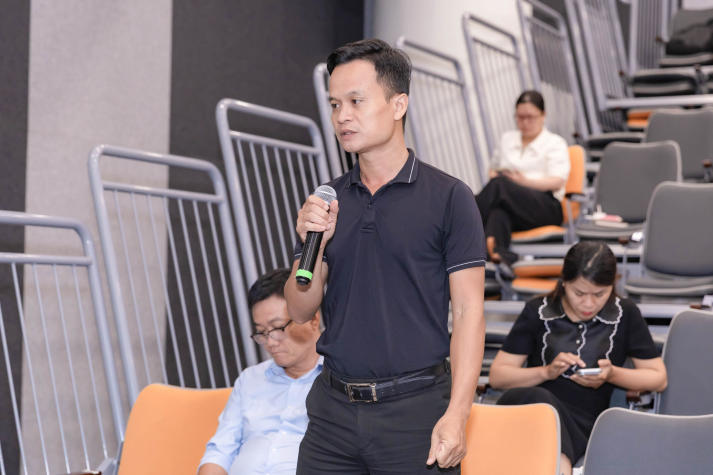
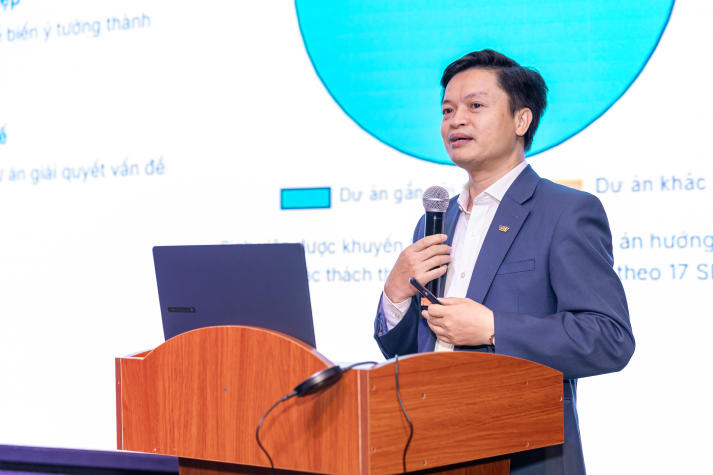
From his experience leading many initiatives that link universities and businesses, Mr. Nguyen Xuan Hung, Director of the Vietnam–Japan Institute of Technology (VJIT) at Ho Chi Minh City University of Technology (HUTECH), shared methods for developing innovative solutions through collaboration at the first training program on innovation activities for startups and SMEs in Ho Chi Minh City. The program was organized by the city’s Department of Science and Technology on August 6 at the Startup and Innovation Hub of Ho Chi Minh City.
From his experience leading many initiatives that link universities and businesses, Mr. Nguyen Xuan Hung, Director of the Vietnam–Japan Institute of Technology (VJIT) at Ho Chi Minh City University of Technology (HUTECH), shared methods for developing innovative solutions through collaboration at the first training program on innovation activities for startups and SMEs in Ho Chi Minh City. The program was organized by the city’s Department of Science and Technology on August 6 at the Startup and Innovation Hub of Ho Chi Minh City.
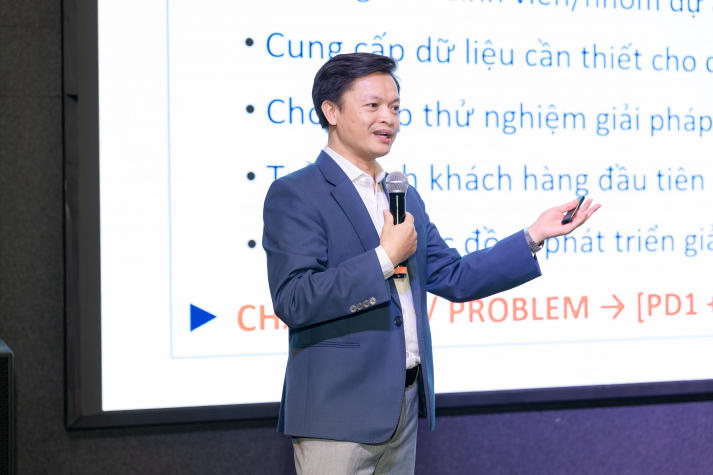
Mr. Nguyen Xuan Hung shared methods for developing innovative solutions
In his presentation “Co-creating with businesses: Methods to develop innovative solutions from the university startup ecosystem,” Mr. Nguyen Xuan Hung emphasized the role of universities as a core source of knowledge in the ecosystem. Young talent, fresh ideas, and the ability to incubate and experiment can be connected with real business needs, helping solve challenges and move toward sustainable development.
 |
 |
 |
 |
Drawing from HUTECH’s practices, the speaker presented innovation and entrepreneurship training models through project design thinking, innovation methods, entrepreneurial mindset, and project-based learning. Students are trained to identify problems, explore needs, propose solutions, create value, and develop initiatives aligned with the Sustainable Development Goals (SDGs).
On this foundation, Mr. Nguyen Xuan Hung proposed the co-creation model between businesses and universities as a practical form of cooperation. Businesses provide problems, data, and testing conditions. Universities connect students, lecturers, experts, research resources, and startups to jointly develop solutions. Businesses can become the first customers, investors, or co-development partners, helping solutions reach the market.
 |
 |
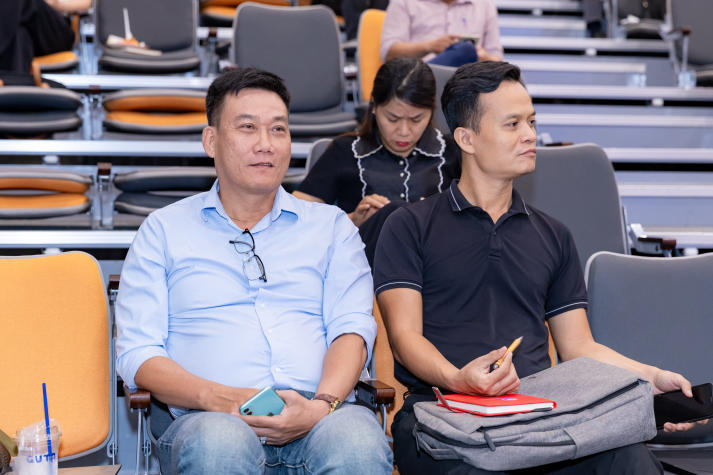
The co-creation model opens a pathway to connect university resources with the real needs of businesses
He stressed that developing an idea requires steps such as identifying the problem, defining value, building a business model, creating prototypes, testing, and gradually moving toward commercialization. This process still faces barriers such as gaps between training and real needs, irregular collaboration mechanisms, limited resources, and difficulties in bringing initiatives to market.
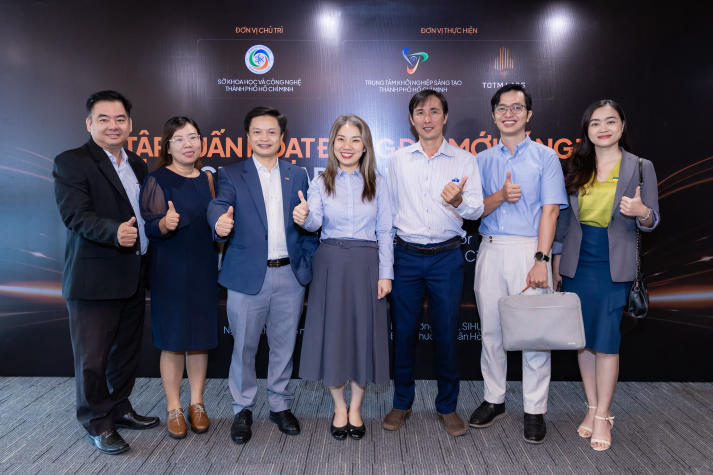
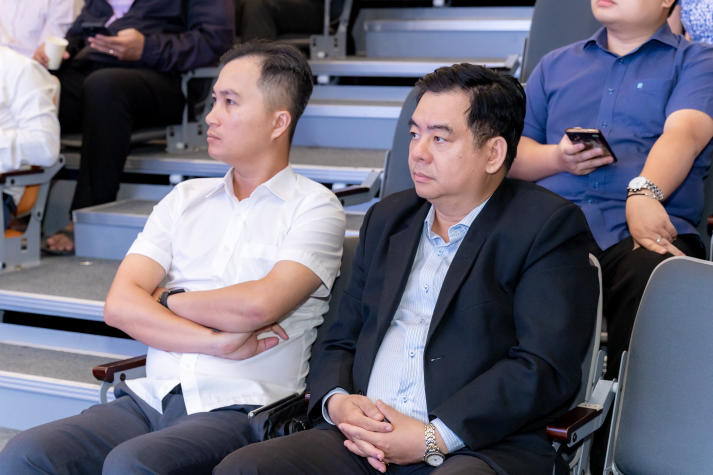
The link between universities and businesses is seen as a foundation for driving sustainable innovation
The co-creation model opens new ways to mobilize university knowledge, research resources, data, and testing conditions to help startups and SMEs refine solutions. Discussions at the event also offered perspectives for businesses on applying technology, developing initiatives, and enhancing innovation capacity, in line with Ho Chi Minh City’s plan to build a creative startup ecosystem for 2026–2030.
|
The training program for startups and SMEs provided content on policies supporting industrial enterprises, digital technology businesses, small and medium enterprises, intellectual property development, and methods to apply innovations in production and business. This activity is part of the city’s strategy to develop its innovation system and creative startup ecosystem for 2026–2030.
The afternoon session focused on workflow automation, safe AI applications, and risk management in businesses. The perspectives shared at the program contributed to expanding resource mobilization, supporting startups and SMEs in applying technology, refining initiatives, and strengthening innovation capacity. |
News: Mỹ Lam
Photo: Thành Phúc
Communication Center
Other news
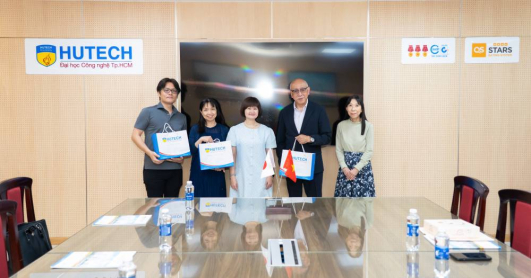
HUTECH discusses Japanese language education in the AI era with the Asia Africa Culture Foundation
Changes in education policy, new requirements for Japanese language proficiency, and the impact of AI on teaching were the main topics discussed...
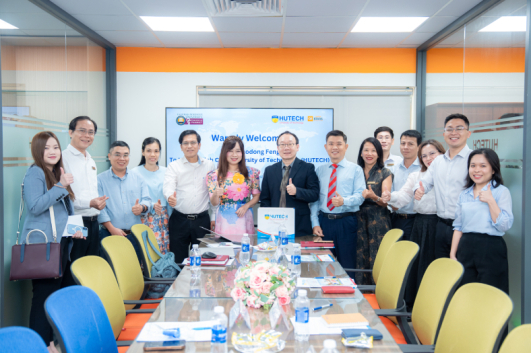
HUTECH School of Medicine and Health Sciences deepens academic ties with California Northstate University
On August 6, HUTECH School of Medicine and Health Sciences and California Northstate University (CNU, USA) focused discussions on the study pathway...
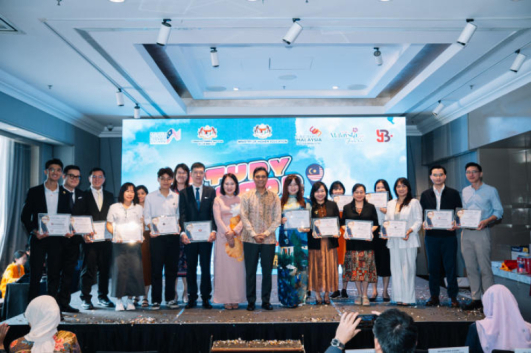
HUTECH expands Malaysian partner network with cooperation agreement with PMX
The international partner network of Ho Chi Minh City University of Technology (HUTECH) continues to grow as the university signs a Memorandum of...
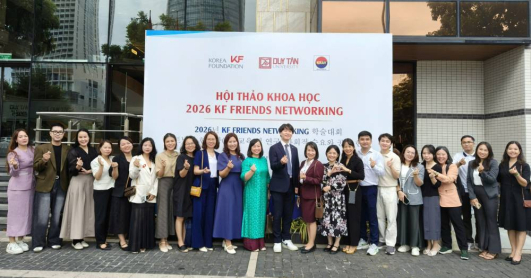
HUTECH contributes insights on outcome-based education at KF Friends Networking 2026
Representing the Faculty of Korean Studies, Ho Chi Minh City University of Technology (HUTECH) made its mark at the KF Friends Networking 2026...
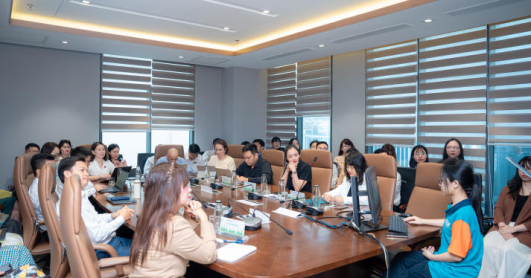
HUTECH exchanges best practices in sustainable higher education development with UEH
Sustainable university models, green transformation, and the application of technology in university governance were among the key topics discussed...
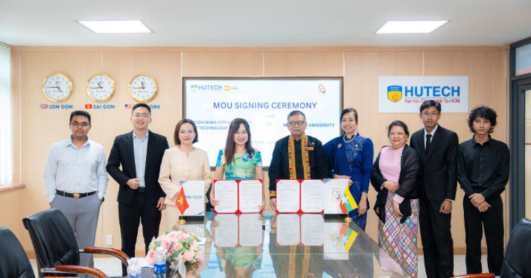
HUTECH signs MoU with Myitkyina University, strengthening Vietnam–Myanmar academic ties
On July 27, Ho Chi Minh City University of Technology (HUTECH) welcomed a delegation from Myitkyina University (Myanmar) for a working visit and...